

Celal Şengör: Atatürk was a dictator but passed every decision through Parliament
Citing his book "Dahi Diktatör", Celal Şengör argued Atatürk was a dictator who passed every decision through Parliament and secured the nation's approval.
· 2 min read
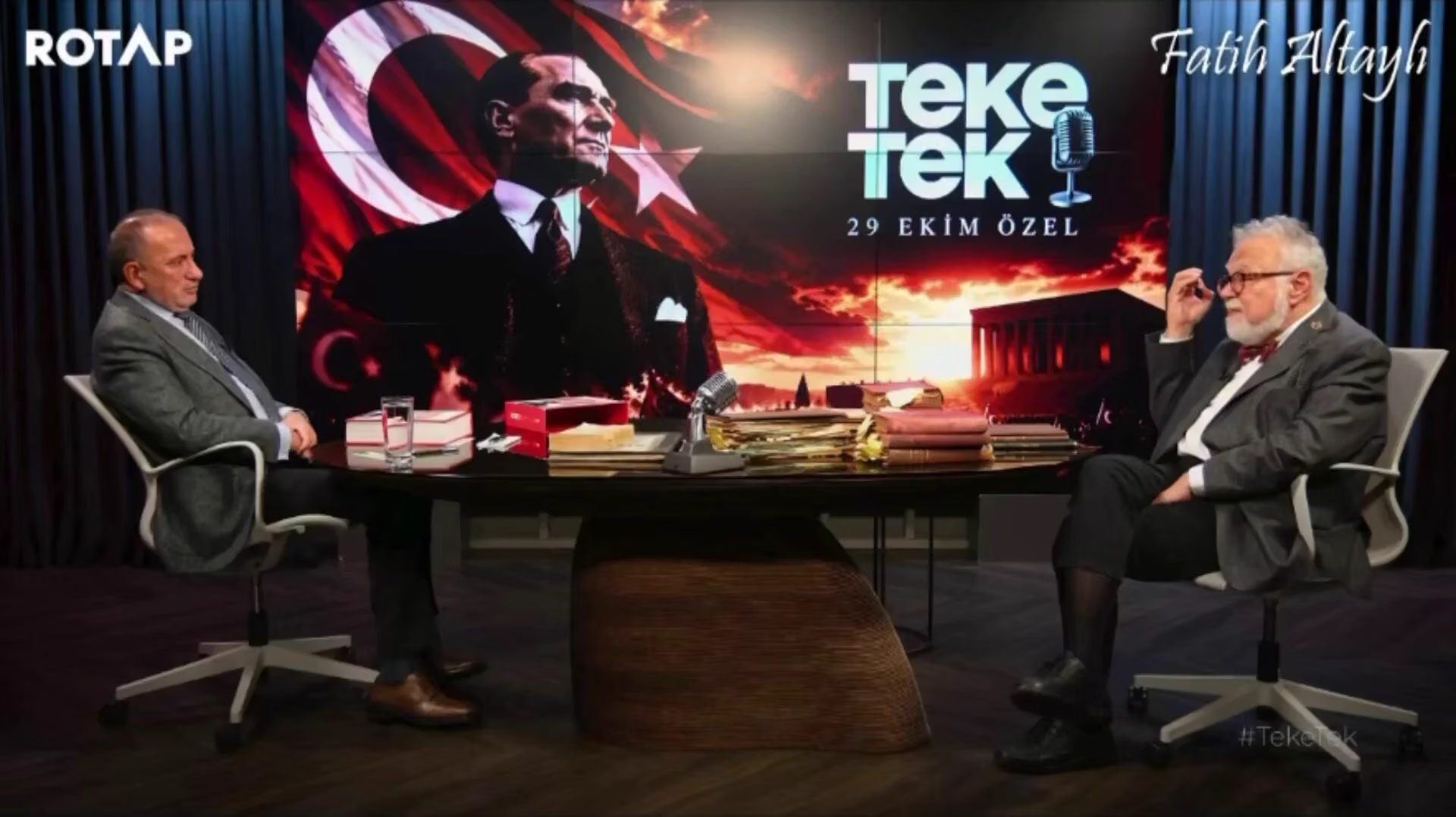
In his assessment of Atatürk's style of governance, Celal Şengör described him as a "dictator", but said Atatürk passed every decision through Parliament and secured the nation's approval.
Şengör recalled that Atatürk repeatedly said, "The master of this nation is the nation itself. Sovereignty belongs to the nation." Asked whether this was put into practice, Şengör answered "No", saying Atatürk gave the orders himself and had them carried out. He added that all of these orders were passed through Parliament.
Atatürk was a dictator, plain and simple.
Celal Şengör
Saying he wrote a book titled "Dahi Diktatör" (Genius Dictator), Şengör described Atatürk as "such a dictator": one who passed everything he said through Parliament and secured the nation's approval.
Account of the adoption of the Republic
Şengör said the Republic was not something Parliament accepted with great enthusiasm either. According to his account, Atatürk sat down with İsmet Paşa and said, "Tomorrow we are proclaiming the Republic."
Şengör recounted that when they came to Parliament, it was said, "Our form of government is the Republic. Those in favor, raise your hands." According to him, before the hands were even all raised, the phrase "Adopted unanimously" was used. Of this procedure, Şengör said, "There is no such thing."
Background
Şengör's assessment rests on the idea of a distinction between Atatürk's statement "Sovereignty belongs to the nation" and the form of governance in practice. Şengör interprets passing decisions through Parliament as securing the nation's approval, and therefore describes Atatürk as both a dictator and a leader who sought approval.
The book "Dahi Diktatör" that Şengör mentions is cited as the written form of this view. In his account of the proclamation of the Republic, İsmet Paşa is named and he stresses that the vote in Parliament was concluded quickly.
Agenda guides
- How are local elections held and how is a mayor elected?Under the Constitution, local elections are held every five years. A mayor is elected directly by voters in a single round: the candidate with the most votes wins, and there is no runoff.
- Who announces a snow day, and are make-up classes held?Snow days are usually announced by the provincial governor's office or the district governorship, based on local weather. Make-up classes are decided under Ministry of National Education rules.
- Mid-year break and report card day: dates under the MEB work calendarMid-year break and report card dates are set each year by the work calendar the Ministry of National Education (MEB) publishes. Check the current dates in MEB's official announcement.
Comments
Sign in to comment.