

Erdoğan: Solidarity among Turkic states has become a strategic necessity
In an article written ahead of the 13th Organization of Turkic States Summit in Ankara, President Erdoğan spoke about economic integration, security and cultural cooperation.
· 3 min read

President Recep Tayyip Erdoğan wrote an article titled "The Century of the Turkic World: From Solidarity to Integration" ahead of the 13th Organization of Turkic States Summit to be held in Ankara. The article was published the same day in Azerbaijan, Kazakhstan, Kyrgyzstan, Uzbekistan, the Turkish Republic of Northern Cyprus, Turkmenistan and Hungary. Saying world politics is undergoing a fundamental change, Erdoğan stated: "Solidarity among Turkic states has become a strategic necessity."
Chairmanship and emphasis on unity
Erdoğan described the unity of the Turkic world as the strongest expression of the deep-rooted legacy inherited from a shared history and of the will to shape a common future. He said the bridges of the heart linking brotherly peoples who have passed through many trials across different geographies over centuries now form the basis of political, human, economic and cultural solidarity under the Organization. He stated that mobilizing the Turkic world's potential toward common goals, strengthening unity with concrete gains and leaving a stronger Turkic world to future generations is the shared responsibility of Turkic states.
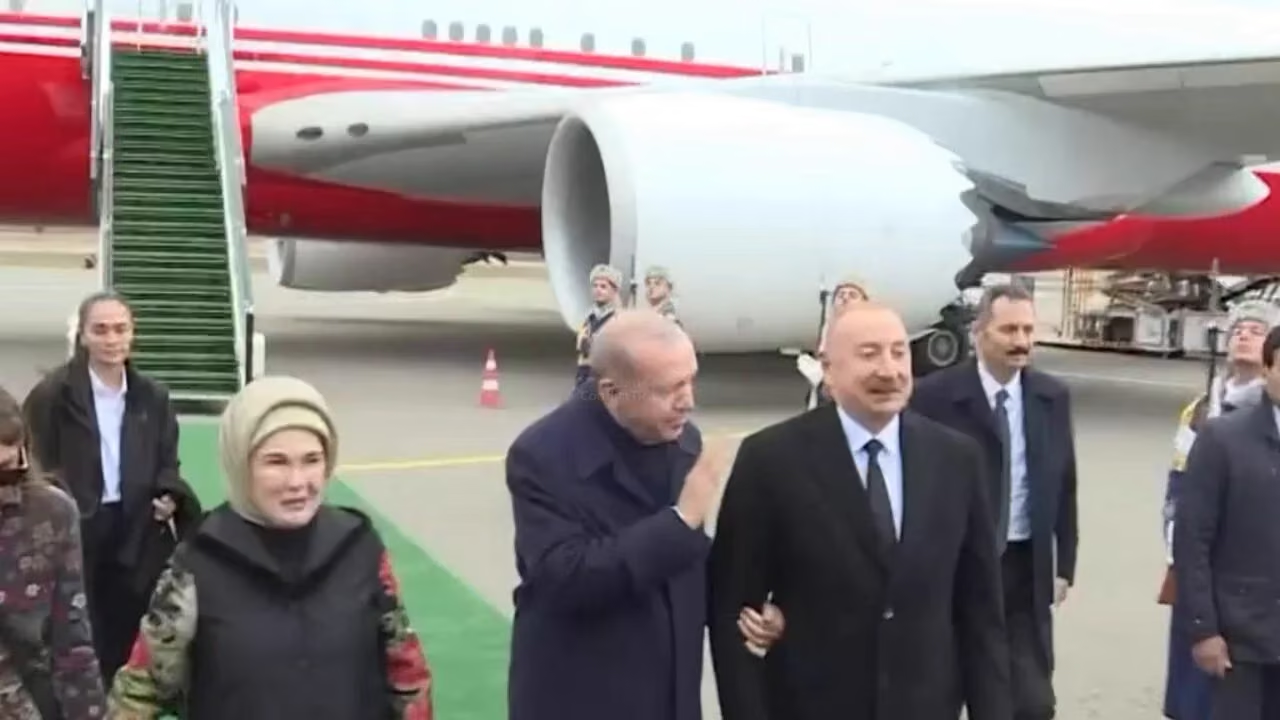
Referring to the chairmanship Türkiye will take over from Azerbaijan at the summit, Erdoğan said he sees it as a "historic responsibility". He stressed its importance for the Turkic world to reach its common goals and for increasing the Organization's institutional strength. He noted that the ideal of unity bequeathed by İsmail Gaspıralı is today a source of inspiration guiding the Organization's activities, and that the structure built on the foundations laid in Nakhchivan is becoming more effective every day.
Uluslararası sistemin adalet ve güveni tesis etmekte zorlandığı, savaşların ve krizlerin geniş coğrafyaları etkilediği bir dönemde Türk devletlerinin dayanışması stratejik bir zaruret hâline gelmiştir.
President Recep Tayyip Erdoğan
Erdoğan said the foundation of the Turkic world's unity is respect for the sovereignty, independence and national will of each brotherly country, and that this unity will rise on mutual trust and interests as much as shared values.
Economic integration and security
The article placed economic integration at the top of the priorities the Organization should focus on in the coming period. Erdoğan said the Middle Corridor across the Caspian offers a historic opportunity, that trade between Asia and Europe is being reshaped, and that the Turkic geography can become one of the key hubs of global transport and logistics networks. He said railways, ports, road links and customs systems are being developed as a complementary whole.
Erdoğan said the Turkic Investment Fund will be used more effectively, obstacles to trade will be overcome together, and countries will add strength to each other in production and investment. He added that energy resources, renewable energy potential and communications infrastructure will be used for common goals. Noting that solidarity in the economic field is also being pursued resolutely in security, he said the ability to act together against terrorism, cross-border crime, cyber threats and natural disasters will be improved by pooling resources. He also stressed that experience in the defense industry will be brought together and joint production capacity increased with domestic and national technologies.
Shared civilization and alphabet
Erdoğan said the most valuable basis of unity is the shared awareness of civilization. He cited Khoja Ahmed Yasawi, Ali-Shir Nava'i, Nizami Ganjavi, Makhtumkuli Fragi, Yunus Emre and Chingiz Aitmatov as signs of the wealth of the same great civilization across geographies. Calling the will shown on a common Turkic alphabet a historic step toward cultural closeness, he said it will be carried further through cooperation in education, science, publishing and digital technologies. He said students will be encouraged to study in brotherly countries, universities and scientists will be brought together, and Turkic languages will be helped to take their deserved place in the age of artificial intelligence.
Agenda guides
- What is the Official Gazette (Resmî Gazete) and how do you read it?The Resmî Gazete is Turkey's official publication where laws, decrees, regulations and official notices are announced. Knowing its structure helps you find the text you need quickly.
- How to apply for the YKS examYou apply for the YKS using the method and dates set out in the guide published by ÖSYM. Read the guide first, verify your details, and always confirm that your application was completed.
- What is the KPSS, who can take it, and what are the score types?The KPSS is the Public Personnel Selection Exam run by ÖSYM for civil servant and contracted public-sector hiring. It is held at bachelor's, associate and secondary-education levels, each with its own score types.
Comments
Sign in to comment.