

Şimşek: Cooperation to replace rivalry in the Middle East after the war
Treasury and Finance Minister Mehmet Şimşek assessed the economic impact of the war at the TRT World Forum, saying regional connectivity, defense cooperation and rules-based trade will come to the fore.
· 3 min read
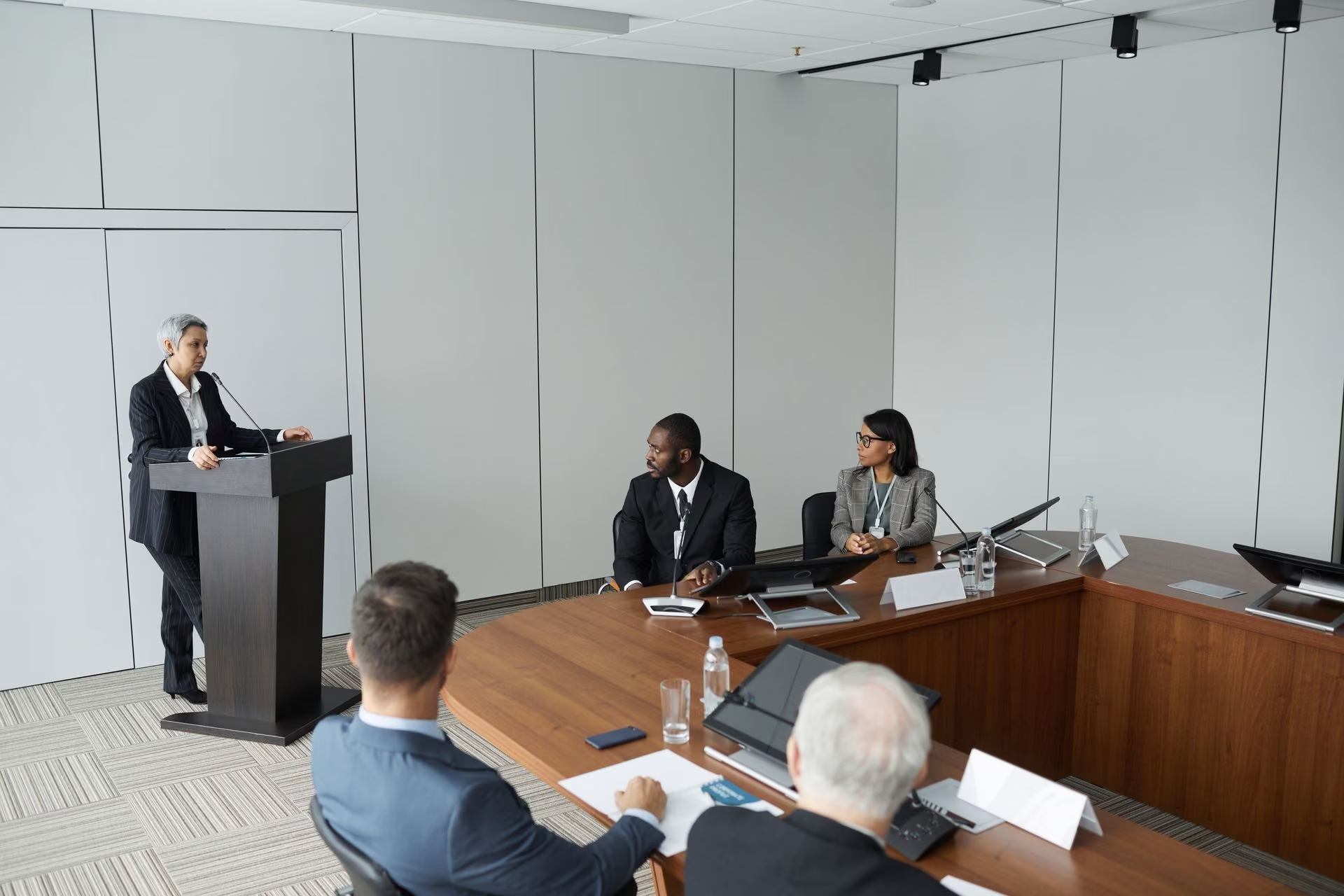
The TRT World Forum, held at the Istanbul Congress Center under the theme "A Decentralized World: Who Leads When the Rules No Longer Apply?", has ended. The closing session of the forum, organized since 2017, was titled "Toward a Painful Recovery: National Economies After the Wars in the Middle East". Treasury and Finance Minister Mehmet Şimşek spoke at the session, assessing the economic consequences of the wars and the outlook for the region.
Economic impact of the war
Şimşek said the conflict caused a serious energy supply shock in the short term and that the global economy would struggle to absorb it. He said export and import volumes fell markedly in frontline countries. Noting that global growth has slowed and financial conditions have tightened because of inflation, the minister said not all of this stems from the war, but its share is large. He stressed that recovery cannot be sustainable without lasting peace.
Şimşek said Gulf Cooperation Council countries have fiscal room thanks to their resources, which could speed up recovery, while uncertainty continues in Iran.
Connectivity and cooperation
According to Şimşek, the war may push countries to reduce their dependencies and risks. Reducing reliance on critical chokepoints such as the Strait of Hormuz and strengthening regional integration are important in this context. The minister said the region's economic structure could take shape around infrastructure investment, connectivity and energy security, and added:
Investing in regional connectivity is, in my view, quite a likely outcome. In fact, doing so is a very clear necessity.
Mehmet Şimşek
The minister said accelerating electrification is no longer a choice but a necessity for countries like Türkiye. He noted that intra-regional trade in the Middle East and North Africa remains low and that economic diversification could increase trade over the long term. Saying the war may lead countries toward stronger cooperation instead of rivalry, Şimşek said defense industry partnerships and regional security cooperation will gain importance. As an example, he cited the Mecca Agreement, recently ratified by the Grand National Assembly of Türkiye, which covers Pakistan, Saudi Arabia and Türkiye.
Şimşek said regional capital is expected to return to the region to support recovery, and that investment in alternative trade corridors is being discussed as potentially reaching about 660 billion dollars. He noted that these resources could also help finance higher defense spending and that the war may reduce some countries' tendency to invest for political reasons.
Türkiye's trade and defense agenda
Şimşek said Türkiye continues to support rules-based trade even as protectionism rises. He said Türkiye has 54 free trade agreements, including with Customs Union countries, covering about 70 percent of its exports. He added that 3 agreements are awaiting ratification and that talks continue on new-generation agreements with Japan, Indonesia, Gulf Cooperation Council countries and Canada.
Noting that Türkiye is part of the Middle Corridor running from Beijing to London, the minister said they encourage regional countries to invest in the Development Road Project, which would link the Persian Gulf to China and Europe via Türkiye. He said projects such as reviving the Ottoman-era railway line with Saudi Arabia and electricity links are also being considered.
Şimşek said Türkiye contributes to mediation and peace efforts in regional and global conflicts, and that deterrence capacity must also be strengthened. Noting that Türkiye has developed significant capabilities in the defense industry in recent years, the minister said about 18 billion dollars in new orders for defense products were received last year, that the sector has about 4 thousand companies, and that around 1400-1500 projects worth over 1 billion dollars are under way.
Saying Türkiye ranks second after China in the global contracting sector, Şimşek said reconstruction needs arising from wars in the neighboring region are expected to reach at least 1 trillion dollars over the next 10 years, and that Turkish companies will play an active role. The minister also said the war will fundamentally change the region, that it will no longer be as it was, and that countries will first have to invest in their own domestic and national capabilities.
Bora Haber previously reported: Turkey's Defense Industry Agency Turns 41: Localization Rate Up From 20% to Over 80% and Şekib Avdagiç elected Istanbul Chamber of Commerce chairman for a third time.
Economy guides
- Credit card interest rates: CBRT maximum contractual and late-payment ratesPer CBRT's October data, the monthly maximum contractual rate is 3.25 percent for debts under TL 30,000, 3.75 percent for TL 30,000–180,000 and 4.25 percent above TL 180,000. Late-payment rates are 3.55, 4.05 and 4.55 percent.
- How much are KYK scholarships and loans? Payment schedulePer the Ministry of Youth and Sports, from 6 January 2026 the monthly scholarship/loan is 4.000 TL for associate and undergraduate, 8.000 TL for master's and 12.000 TL for doctoral students. No 2027 amount has been announced yet.
- How much is the birth grant? Amounts, conditions and applicationFor children born from 1 January 2025, the birth grant is a one-off 5 bin lira (5,000 lira) for the first child, 1500 lira monthly for the second, and 5 bin lira (5,000 lira) monthly for the third and subsequent children.
Comments
Sign in to comment.