

South Korean Scientists Develop New Sodium-Ion Battery Electrolyte Retaining 90.4% Capacity After 1,000 Cycles
A polymer electrolyte developed by a team at Chonnam National University let a sodium-ion battery keep 90.4% of its capacity after 1,000 charge cycles.
· 2 min read
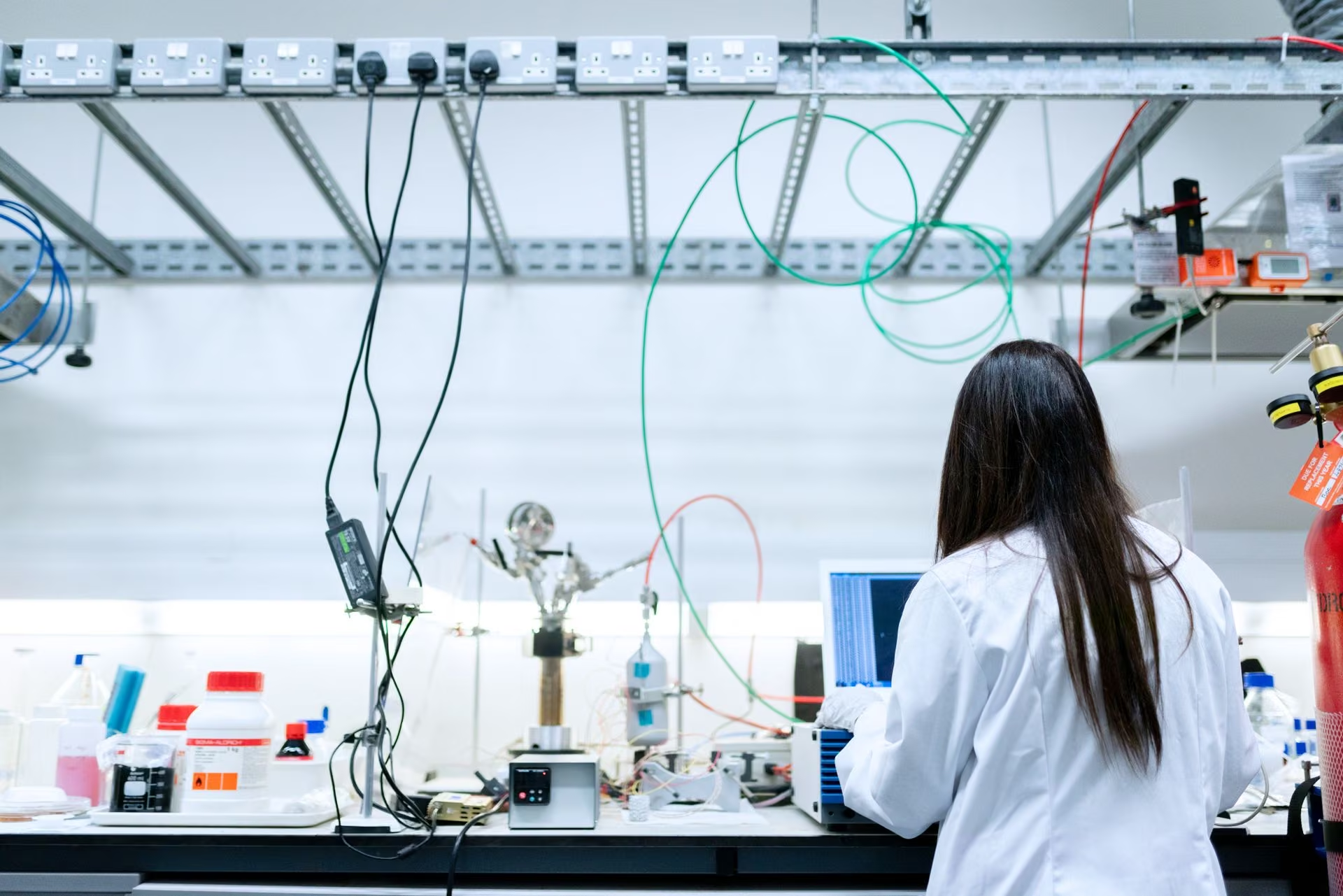
South Korean scientists have developed a new electrolyte that could make sodium-ion batteries safer and longer-lasting. In laboratory tests, the battery retained 90.4% of its capacity after 1,000 charge cycles. The test cell kept powering an LED even after it was bent and cut.
The work was carried out by a team led by Professor Chan Jin Pak of Chonnam National University. The technology relies on a special polymer material. It allows sodium ions to move and also makes the electrolyte more durable.
A three-component design
The researchers prepared the electrolyte from three components: sodium perchlorate, N-isopropylacrylamide and succinonitrile. These first form a liquid mixture, which is then converted into a solid, sturdy polymer structure. As a result, the electrolyte does not leak out, while ions can still move within the structure. The approach reduces the leakage risk seen in liquid electrolytes and gives the cell a more stable structure.
In safety tests, the electrolyte proved resistant to catching fire. In the demonstration, the LED kept working even though the battery body had been bent and cut.
Background
Sodium is regarded as an alternative to lithium-ion batteries because it is abundant and cheap. However, metallic sodium reacts chemically with ease. For this reason, metal formations called dendrites can appear in ordinary liquid electrolytes; dendrites can damage the battery and cause short circuits.
The electrolyte is described as the medium in which ions travel back and forth inside the battery, and safety and lifespan depend largely on its structure. Solving this problem is seen as an important step toward wider adoption of sodium-ion batteries. The development is said to help make sodium-based batteries more reliable and bring them closer to practical use. Because the work is still at the laboratory stage, no commercial product or release date has been announced.
Science guides
- What is e-Nabız and how do you view lab results?e-Nabız is the Ministry of Health's personal health record system in Türkiye. Log in with e-Devlet or another supported method and open “Tetkik Sonuçlarım” (test results) to see your lab results.
- How to change your family doctor in TürkiyeA family doctor change is made by applying to the Provincial/District Health Directorate, or through electronic channels where available, under the Ministry of Health's system. Conditions and waiting periods may change, so check the current rules with an official source.
- What is general health insurance (GSS) and who pays premiums?GSS is Türkiye's compulsory health insurance covering residents against healthcare costs. Most people pay the premium themselves or through an employer; the state covers it for certain groups.


Comments
Sign in to comment.