

Türkiye's sustainable agriculture plan: 6 goals, 22 actions and a Digital Irrigation Management System
The plan aims to cut the environmental impact of farming and boost climate resilience, with reduced pesticide and chemical fertilizer use and a new digital irrigation system.
· 3 min read
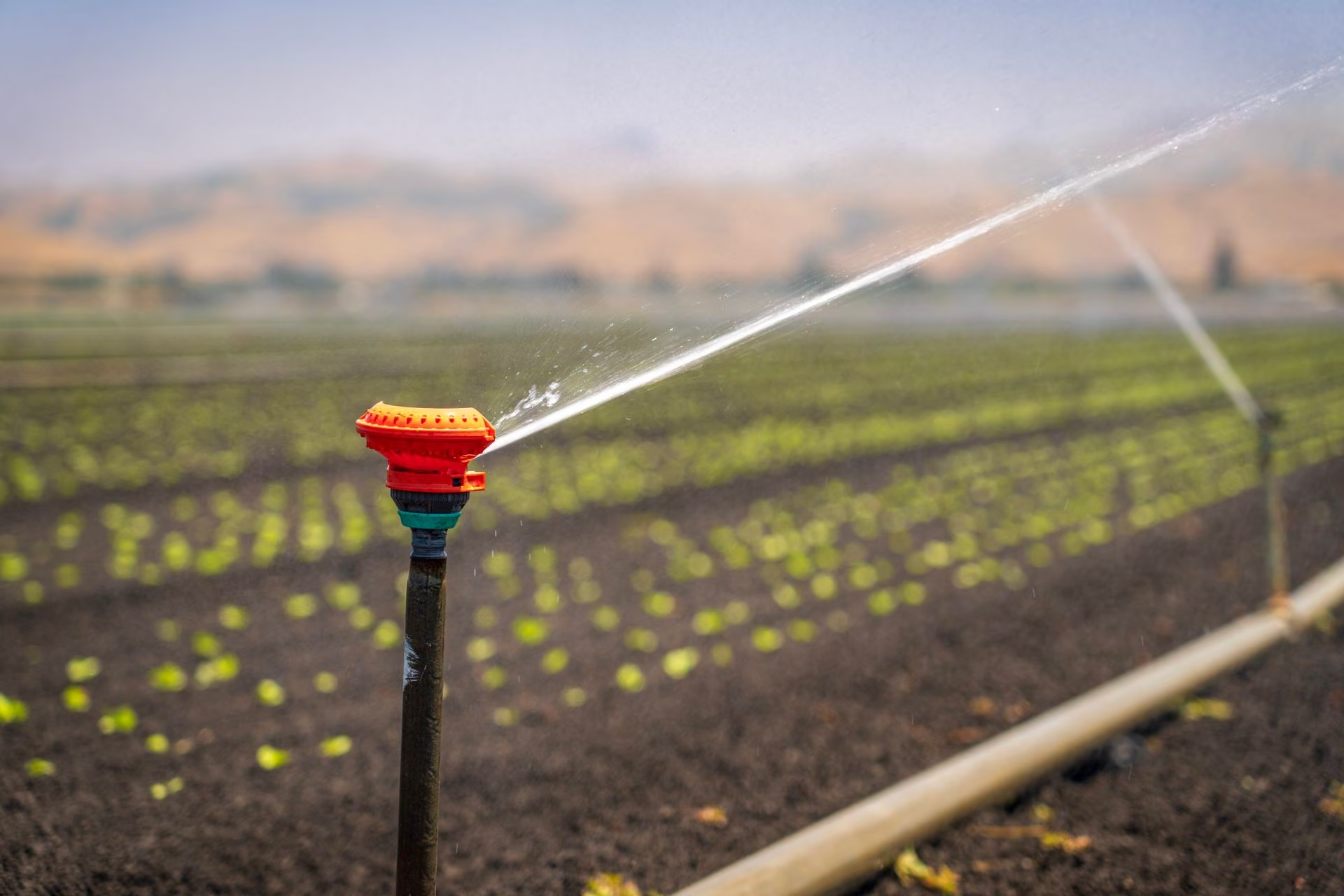
A roadmap for the digitalization of agriculture and its adaptation to climate change has taken shape. Under the "Sustainable Agriculture" heading, 6 goals and 22 actions were set. The aim is to reduce the environmental impact of agricultural production and strengthen the sector's resilience to climate change. The plan includes cutting pesticide and chemical fertilizer use, developing organic farming, launching a "Digital Irrigation Management System" and building infrastructure for carbon farming.
Pesticides, organic farming and fertilizer
Work to reduce pesticide and antimicrobial use will follow the targets set by the European Union (EU). Awareness activities will continue and the use of biological and biotechnical control methods will be expanded. Pesticide use will be traceable from farm to table.
The plan envisages increasing organic production areas and volumes and completing alignment with the EU's new organic farming legislation. Cooperatives and producer unions will be strengthened so organic products can reach wider markets. Under the coordination of the Trade Ministry, initiatives will be taken to secure mutual recognition with the EU in organic farming.
R&D work will be carried out to reduce chemical fertilizers whose raw materials depend on imports. It will cover determining usage amounts of new-generation and slow-release fertilizers, reducing losses of plant nutrients per unit, and including organic fertilizers in fertilization programs. Production and use of organic and organomineral fertilizers will be encouraged and the use of stabilized sewage sludge on soil will be expanded. Land consolidation and registration work will continue; registration on the 10 million hectares of consolidated land will be completed by the end of 2028.
Water, livestock and energy
Water efficiency work will be carried out under the Action Plan for Preventing Water Losses and Leaks in the Agricultural Sector. In livestock, methane emissions from enteric fermentation will be identified and feed conversion ratios for selecting breeding animals will be determined. R&D will be conducted on alternative feed sources and feed additives that suppress methane production.
In aquaculture, water, feed and energy efficiency will be increased, climate adaptation capacity strengthened, and waste and by-products used under a circular economy approach. Existing geothermal resources in Aydın, Denizli, İzmir, Ağrı and other provinces are planned to be used in agriculture-focused specialized organized agricultural zones. Next year, greenhouses using renewable energy and plant, livestock and aquaculture production and processing facilities will be supported. The IPARD III Programme's "Diversification of Farm Activities and Business Development" measure will be expanded, and irrigation systems idle because of pumping costs will be made operational with solar power plant support.
Circular agriculture and digitalization
Under the circular agriculture goal, R&D projects will be supported for applying processed agricultural waste to soil and using it as energy. In 2026-2028, food waste awareness work will be done, checklists will be prepared for businesses at points of sale and mass consumption, and efforts will begin to start the cold chain for fresh fruit and vegetables at the harvest site.
Under the digitalization goal, a "Digital Irrigation Management System" will be set up for irrigation, drought and yield forecasting. Water quantity and quality will be monitored with satellite imagery and artificial intelligence, and production plans in basins will be made according to water constraints. The infrastructure of the National Water Information System will be strengthened in 2027 and integrated into e-Devlet.
With the Integrated Administration and Control System (EİKS), to be introduced in 2026-2028, subsidies will be made more effective. The Land Parcel Identification System (LPIS) will be updated and an area monitoring system developed. Smart farming applications based on artificial intelligence and data-driven business models will be expanded, and product verification and crop yield forecasting will be carried out.
Bora Haber previously reported: NASA Space Apps Challenge 2027 Dates Not Yet Set; 2026 Event Runs Nov. 14-15 and Circular issued on National Just Transition Strategy and Action Plan (2027-2029).
Guides on this topic
Economy guides
- Credit card interest rates: CBRT maximum contractual and late-payment ratesPer CBRT's October data, the monthly maximum contractual rate is 3.25 percent for debts under TL 30,000, 3.75 percent for TL 30,000–180,000 and 4.25 percent above TL 180,000. Late-payment rates are 3.55, 4.05 and 4.55 percent.
- How much are KYK scholarships and loans? Payment schedulePer the Ministry of Youth and Sports, from 6 January 2026 the monthly scholarship/loan is 4.000 TL for associate and undergraduate, 8.000 TL for master's and 12.000 TL for doctoral students. No 2027 amount has been announced yet.
- How much is the birth grant? Amounts, conditions and applicationFor children born from 1 January 2025, the birth grant is a one-off 5 bin lira (5,000 lira) for the first child, 1500 lira monthly for the second, and 5 bin lira (5,000 lira) monthly for the third and subsequent children.


Comments
Sign in to comment.