

Democrats Lead in Both Chambers in US Midterms as Trump Accepts the Results
Democrats reached a majority in the US midterms for the House and Senate. President Trump said he is ready to work with Democrats while also noting he may veto bills.
· 3 min read
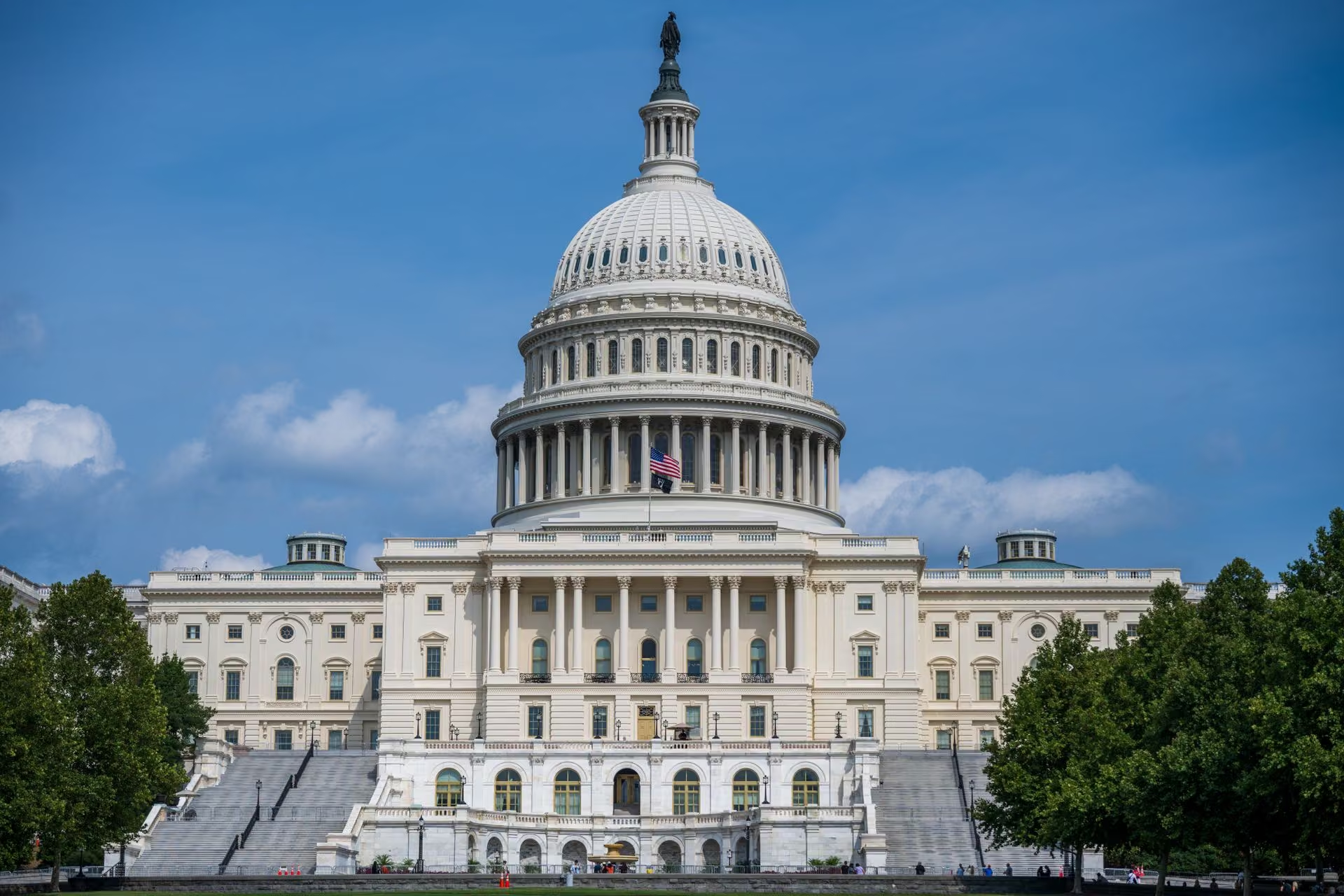
As polls closed in the US midterm elections for the entire House of Representatives and 35 Senate seats, Democrats moved ahead in both chambers of Congress. In the vote, seen as the biggest test of President Donald Trump's second term, Republicans failed to keep their House majority according to preliminary results.
Seat breakdown
Voters cast ballots for all 435 seats in the House and 35 of the 100 Senate seats. According to preliminary results, Democrats passed the 218 seats needed for a House majority; at that stage Democrats held 219 seats and Republicans 123. According to unofficial results, Democrats also won a Senate majority, with the tally at 52 Democrats and 40 Republicans.
US media projections, however, say Democrats are winning 244 House seats and Republicans 191. A party needs at least 218 seats for a majority.
Trump's remarks
Speaking to a newspaper, Trump said he was ready to accept the election results and that they were ready to work with Democrats. Trump also posted an image from his own social media account of a hat reading VETO. In recent days he had said that if Democrats won a majority in Congress he would be "Mr. Veto" and would veto all bills.
I was not on the ballot. If I had been, we would have won by a large margin.
Donald Trump
Democrats will send irrational things, and I will veto them.
Donald Trump
Among Trump's other remarks: "Iran partly played a role in the election results." "Voters were not happy with the short-term effects of gasoline prices." "Democrats did a good job in the elections." "We can work with Democrats on immigration." Trump also said he does not think he will change the cabinet.
State results
In Texas, Democrat James Talarico beat Republican rival Ken Paxton to win the Senate seat, the first Democratic win in the Republican stronghold since 1988. It was also reported that a Democrat won in Kansas for the first time since 1932. Democratic candidates also won in Colorado and New Mexico, and Democrats took seats in Georgia, Virginia, Massachusetts, Rhode Island, Delaware, New Jersey, Illinois, North Carolina and New Hampshire.
In the House, Democratic Minority Leader Hakeem Jeffries and Alexandria Ocasio-Cortez were re-elected. Rashida Tlaib, a Congress member of Palestinian descent from Michigan, kept her seat by defeating Republican rival James D. Hooper. Tlaib has represented Michigan's 13th district since 2019.
A historic result in Georgia
Democratic candidate Keisha Lance Bottoms won the Georgia governor's race, becoming the first Black woman governor in US history. The state government passed from Republicans to Democrats for the first time in 24 years; Georgia's last Democratic governor was elected in 1998. Many prominent Democrats backed Bottoms, and former President Barack Obama announced his support with a video message. Bottoms served as Atlanta mayor from 2018 to 2022.
Bora Haber previously reported: Trump's wave while walking to a helicopter on Kansas trip draws debate and Trump: $4 billion in aid to Israel will be halted.
Background
Trump has 2 years left in his term. Because voting hours vary by state, counting and poll closings continued in the following hours; by the time of writing, polls had closed in 30 states. As results become clearer, the effect of the new balance of power in Congress on the rest of Trump's term is being discussed.
World guides
- How does the UN Security Council work?The UN Security Council is the UN organ with primary responsibility for maintaining international peace and security. It has 15 members; 5 permanent members hold veto power, and its decisions can be binding.
- What is NATO and how does it make decisions?NATO is an intergovernmental military and political alliance founded in 1949, built on the collective defence of its members. Decisions are taken in the North Atlantic Council by consensus, not by voting.
- How does the European Union work, and where does Turkey's accession process stand?The EU is a union of member states that delegate powers to common institutions. Turkey became a candidate in 1999 and began negotiations in 2005; the process has been effectively stalled for a long time.

Comments
Sign in to comment.