

Giant mud volcano network and oil-gas migration routes found in the Caspian
Azerbaijani scientists have identified an interconnected mud volcano system in the South Caspian Basin and channels through which oil and natural gas move underground.
· 2 min read
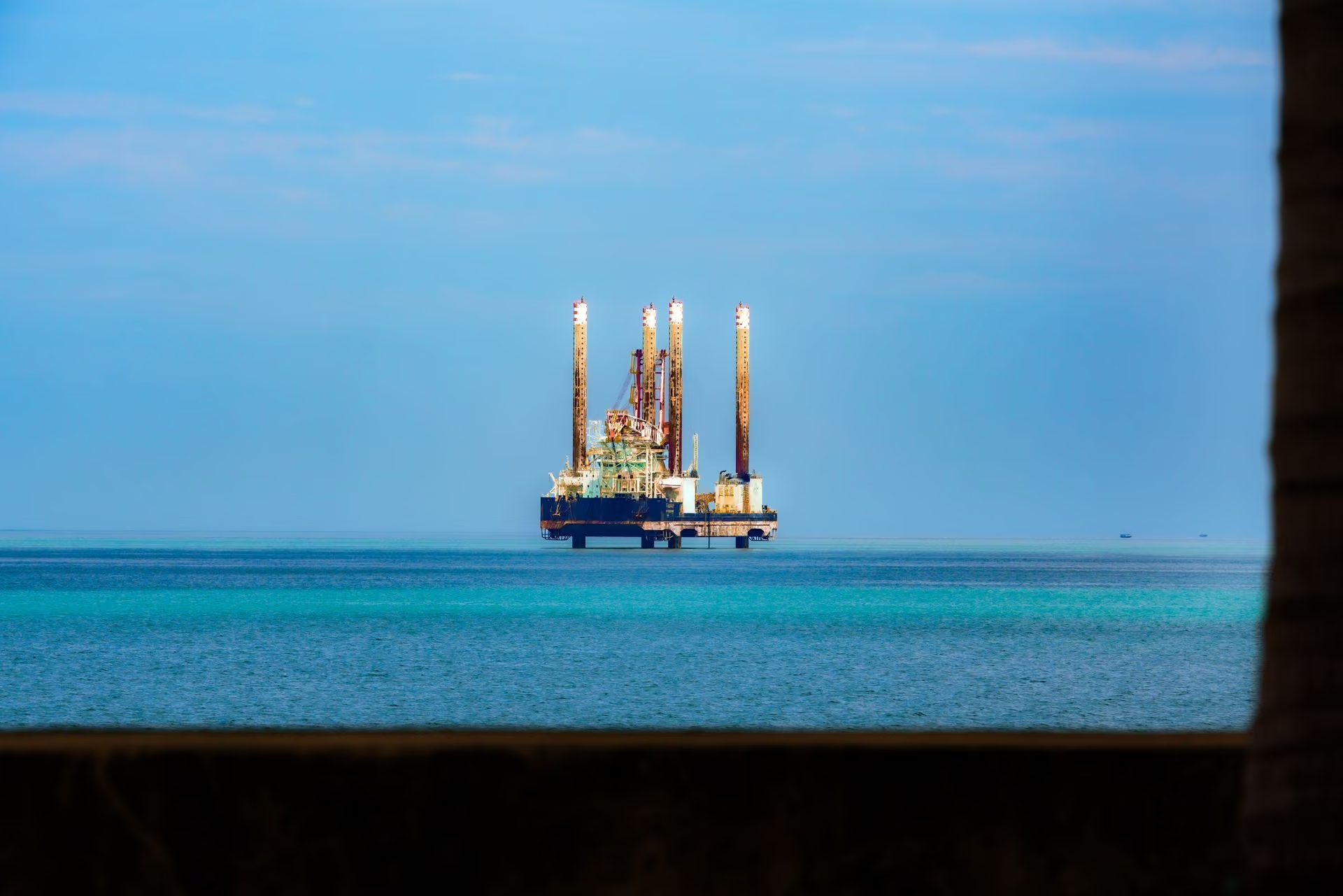
A scientific study in Azerbaijan's section of the Caspian Sea has revealed a giant, interconnected network of mud volcanoes deep beneath the seabed, along with pathways that let oil and natural gas move underground. The findings effectively redraw the subsurface map of the South Caspian Basin, regarded as one of the world's important energy basins.
The work was carried out by scientists Namaz Yusubov, Ibrahim Guliyev and Shalala Huseynova. The results were published in the journal Geological Journal and shared in December 2025.
Structures thought to be independent turn out to be linked
Using two- and three-dimensional seismic subsurface imaging, the research showed that many structures previously thought to be separate rock folds are actually part of a large mud volcano system connected by shared channels.
Unlike conventional volcanoes, these structures carry not molten rock (magma) but fluids, gas and mud from underground to the surface. They therefore hold important clues about how the region's energy resources formed.
The researchers determined that these volcanic channels, fed by deep rock layers dating back millions of years, form "migration routes" that work like pipelines, letting oil and natural gas travel underground and collect in certain areas.
The team also located new mud volcanoes, both offshore and onshore, that had not been noticed before, and showed a direct link between the folding of subsurface layers and the activity of these volcanoes.
Significance for the energy sector
The study does not directly announce a new commercial reserve discovery. Still, by clarifying the routes along which oil and natural gas accumulate, the findings are expected to directly guide new exploration and drilling in Azerbaijan's Caspian and onshore fields.
Bora Haber previously reported: Türkiye halts Turkmen gas imports via Iran over US sanctions pressure.
Technology guides
- How to create a strong passwordA strong password is long, unpredictable and unique to each account. Use a random password of at least 14-16 characters or a multi-word passphrase, and add a password manager and two-step verification.
- How much is the IMEI registration fee? Registering a phone brought from abroadThe IMEI registration fee in 2026 is 54 bin 258 TL (54,258 TL). For 2027, about 69 bin 358 TL (69,358 TL) is expected with the 27.83 percent revaluation rate; the final amount depends on the tariff published in the Official Gazette.
- What is two-step verification and how do you turn it on?Two-step verification adds a second proof (a code, prompt or key) on top of your password when you sign in. You enable it in your account's security settings, and it protects you even if your password is stolen.


Comments
Sign in to comment.