

Google's Project Suncatcher satellite sends AI-written haiku to Earth from orbit
Google announced that its Project Suncatcher prototype satellite answered a command from Earth with an AI-written haiku. The company plans to launch two more satellites in 2027.
· 2 min read
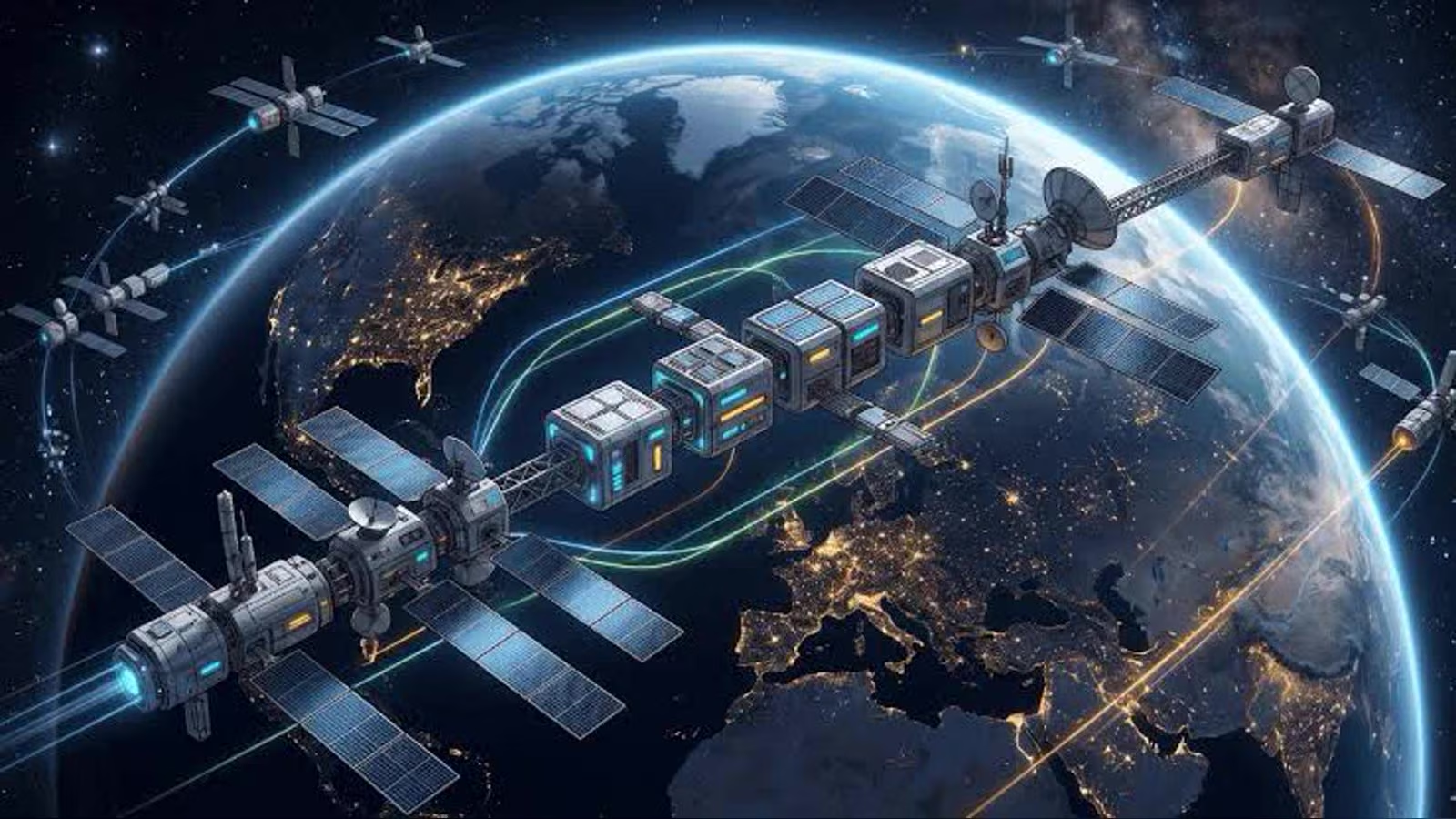
Google announced on October 30, 2026 that the first prototype satellite sent into orbit under Project Suncatcher, which aims to build AI data centers in space, answered a command from Earth with a poem using artificial intelligence. The company plans to launch two more satellites in 2027.
Haiku relayed from orbit
Travis Beals, Senior Director of Intelligence Paradigms at Google, described the development as the mission's "Hello World" milestone and the company's first AI response from a data-center-class Tensor Processing Unit (TPU) in orbit. During a ground station contact, the team sent its first prompt to the onboard Gemma 4 open model, asking it to write a haiku about being in space.
The poem was relayed to Earth as the satellite passed over Svalbard, Norway. It reads: "Blue marble below / Data streams in silent grace / Starlight feeds my core." After the first output, the team also tried space-themed limericks and telemetry prompts reporting the technical status of the payload systems.
Launch and commissioning
The satellite was developed with Planet and launched on October 1, 2026 on SpaceX's Transporter-18 rideshare mission. In the weeks after launch, the team completed a commissioning checklist that included powering the host computer and TPU trays and running initial machine learning tests. The mission aims to collect in-orbit data on how Google's TPUs withstand the physical stress of spaceflight, radiation and extreme temperatures. The peer-reviewed paper detailing the research has been published in the journal Joule.
Background
Google announced Project Suncatcher on November 4, 2025. It is described as a long-term research initiative exploring whether an interconnected network of solar-powered satellites equipped with Google's own AI chips, TPUs, could one day scale machine learning in space.
Because there is no air in space, shedding heat is seen as one of the main challenges for a TPU in orbit; heat can only be radiated away. Google says it is testing combinations of heat pipes and radiators to address this. The satellite is said to be able to run its workload only for limited stretches.
Technology guides
- How to check planned power outages and what are your rights during an outage?You can check planned outages on your regional electricity distribution company's website, mobile app or call center. The regulator for outage and quality rights is the Energy Market Regulatory Authority (EPDK).
- What is 5G, how does it differ from 4.5G, and what is its status in Türkiye?5G is the fifth generation of mobile communications, aiming for higher speed, lower latency and more connected devices than 4.5G. Check the current service status in Türkiye with the Information and Communication Technologies Authority (BTK) and operators.
- How to create a strong password and what is two-step verification?A strong password is long, unpredictable and different for every account. Two-step verification asks for a second proof besides the password, so your account stays protected even if the password is stolen.


Comments
Sign in to comment.