

Tension in Paris protests: police form shield line, fire breaks out in street
During weekend protests in France, flames rose on the ground in front of a police line in Paris. Police used tear gas to bring the crowds under control.
· 1 min read
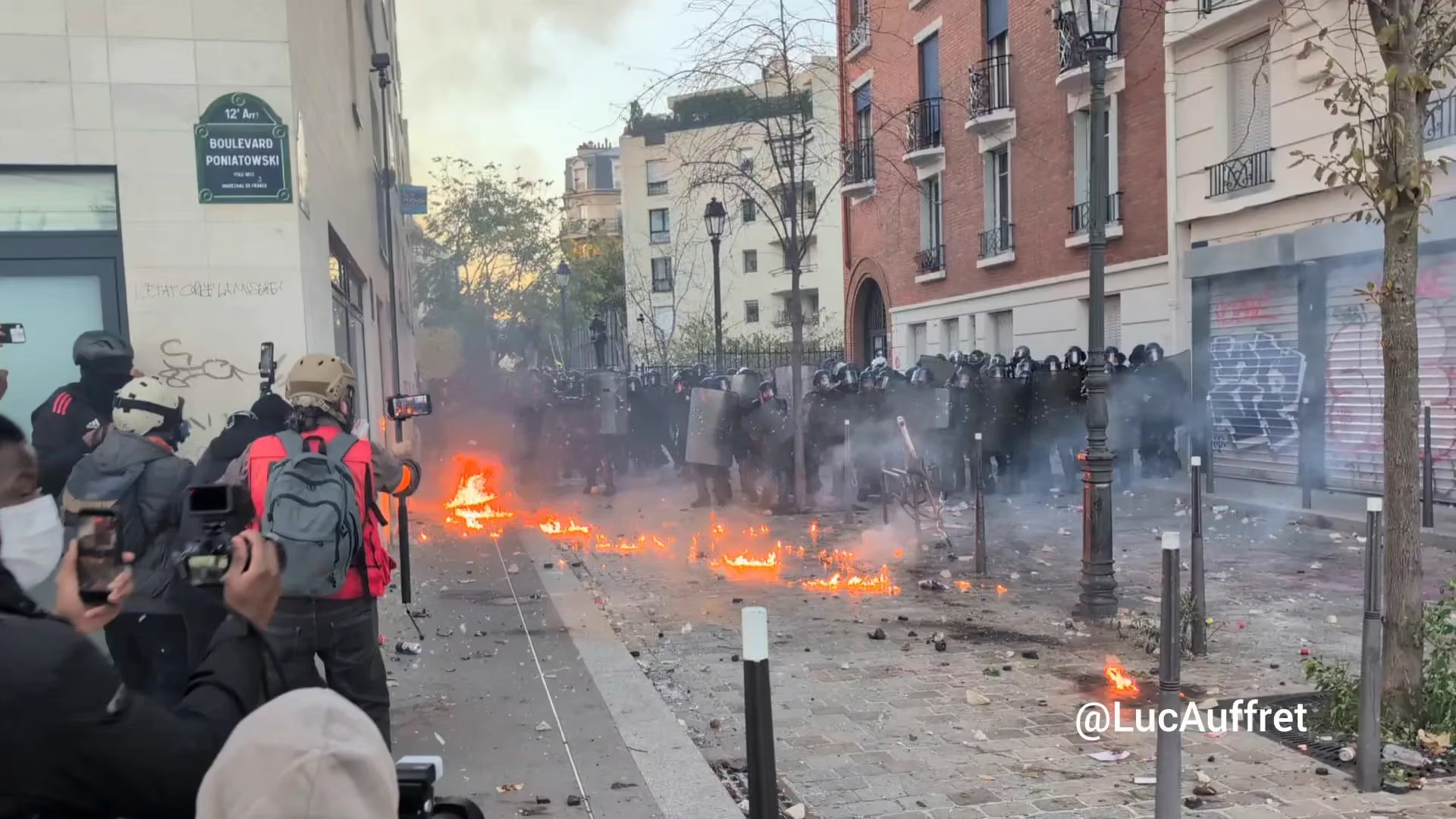
Tension escalated in the French capital Paris during protests on Saturday. Flames burned on the ground in the street in front of a police line. Police officers stood in formation with shields; stones and molotov remnants were seen in the street.
Thousands of people took to the streets. Police used tear gas at one point to bring the crowds under control. What caused the fire remains unclear.
Footage from the scene shows some demonstrations continuing along pre-designated routes, while tension also occurred in undesignated areas where police were trying to restore control. Demonstrations were held across many parts of the country. The protests have become a weekly pattern; some French citizens say they are angry because the demonstrations have damaged businesses and shut down major parts of the city.
Background
The protests began with demands for better conditions in public schools and have since widened to various issues, including the high cost of living and immigration policy. President Emmanuel Macron, referring to events last Saturday, said ultra-left groups carried out political and seditious acts aimed at bringing down the Republic, and called the protests illegitimate.
In recent days, curfews have been applied in cities in France where violence occurred. Prime Minister Sébastien Lecornu announced that the curfews were extended. In Italy, too, cost-of-living protests turned violent, and the Italian government decided to send additional troops to Milan. These developments are not part of the Paris incident; they are context on the same subject.
World guides
- How does the UN Security Council work?The UN Security Council is the UN organ with primary responsibility for maintaining international peace and security. It has 15 members; 5 permanent members hold veto power, and its decisions can be binding.
- What is NATO and how does it make decisions?NATO is an intergovernmental military and political alliance founded in 1949, built on the collective defence of its members. Decisions are taken in the North Atlantic Council by consensus, not by voting.
- How does the European Union work, and where does Turkey's accession process stand?The EU is a union of member states that delegate powers to common institutions. Turkey became a candidate in 1999 and began negotiations in 2005; the process has been effectively stalled for a long time.

Comments
Sign in to comment.