

AI, telesurgery and digital twins in urology: future treatments outlined at IURES 2026
Experts at the IURES 2026 congress said the future of urology lies in personalized, technology-supported treatments that preserve function.
· 2 min read
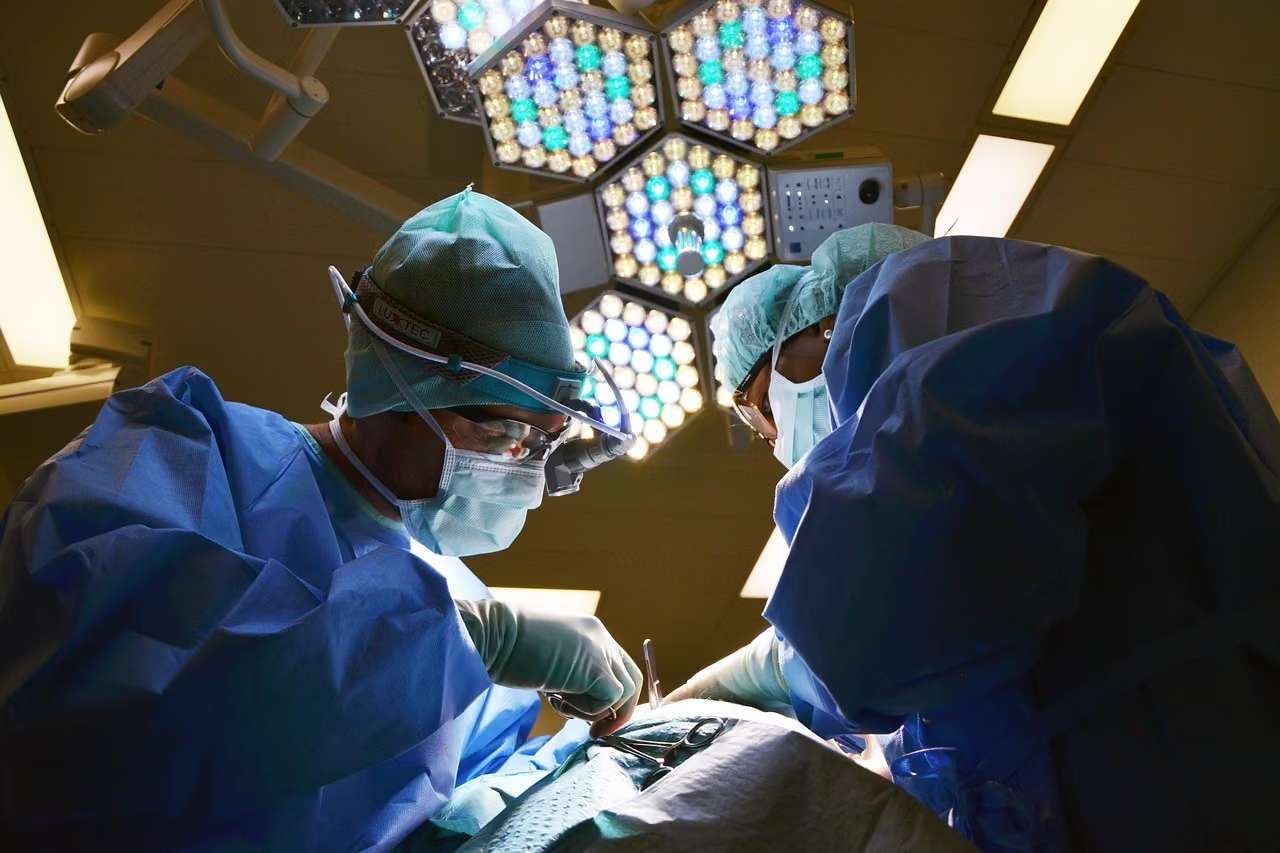
Speaking at a press conference held during the congress, IURES 2026 Congress President Prof. Burak Turna said the future of urology lies in personalized, technology-enhanced treatments that preserve function as much as possible while treating disease. Experts described developments in robotic surgery, artificial intelligence, telesurgery and 3D modeling.
Fifth-generation robotic surgery and AI
According to Turna, new-generation robotic systems no longer merely refine the surgeon's hand movements. Fifth-generation technology offers more advanced imaging, surgical precision, tactile feedback and more effective use of surgical data. Turna said AI, by analyzing surgical images, anatomical structures and large volumes of data, could in future provide decision support to surgeons during operations, and that its integration with robotics would be an important step toward personalized surgery.
Turna also said that focal therapies for carefully selected patients with localized prostate cancer target only the diseased area, aiming to preserve the healthy parts of the prostate and surrounding critical structures as far as possible.
Telesurgery and single port
Co-president Prof. Murat Binbay said the new era in urology is shaped by telesurgery, single-port surgery, robotic surgery and AI-supported decision technologies. He said telesurgery removes the need for the surgeon to be physically with the patient and could carry the expertise of experienced centers to remote regions. Binbay also stressed that wide clinical use requires careful evaluation of data security, liability framework and infrastructure.
We are moving toward an era in which surgical experience becomes independent of distance.
Prof. Murat Binbay
Binbay said advanced robotic technology performed through a single incision markedly increases patient comfort, particularly in kidney and prostate cancer surgery. He predicted that robotic systems will be strengthened by assistant mechanisms that recognize anatomical structures, warn the surgeon when critical structures are approached, and can be guided by voice commands.
Digital twins and personalized planning
IURES Second President Prof. Emre Huri said that combining 3D printing, digital twins and virtual reality is turning surgery from guesswork into a science of millimetric calculation. He described a digital twin as a mathematical and geometric replica of a patient's organ on a computer, built from real radiological data. CT or MRI images are transferred to specialized software, and engineers and doctors separate the structures using algorithms. On the resulting 3D model, the surgeon can examine the tumor's relationship to vessels from every angle and rehearse the operation virtually.
IURES President Prof. Fatih Atuğ said nerve-sparing robotic surgery in suitable patients can allow precise separation of structures around the prostate. He noted that compared with open surgery, robotics offers advantages such as less blood loss, lower transfusion need, smaller incisions and shorter hospital stays.




Comments
Sign in to comment.