

TESS data reveals two "super-fluffy" planets: TOI-791 b and TOI-791 c
Data from NASA's TESS telescope revealed two planets with Jupiter-like sizes but very low masses. TOI-791 b and c are among the lowest-density planets known.
· 2 min read
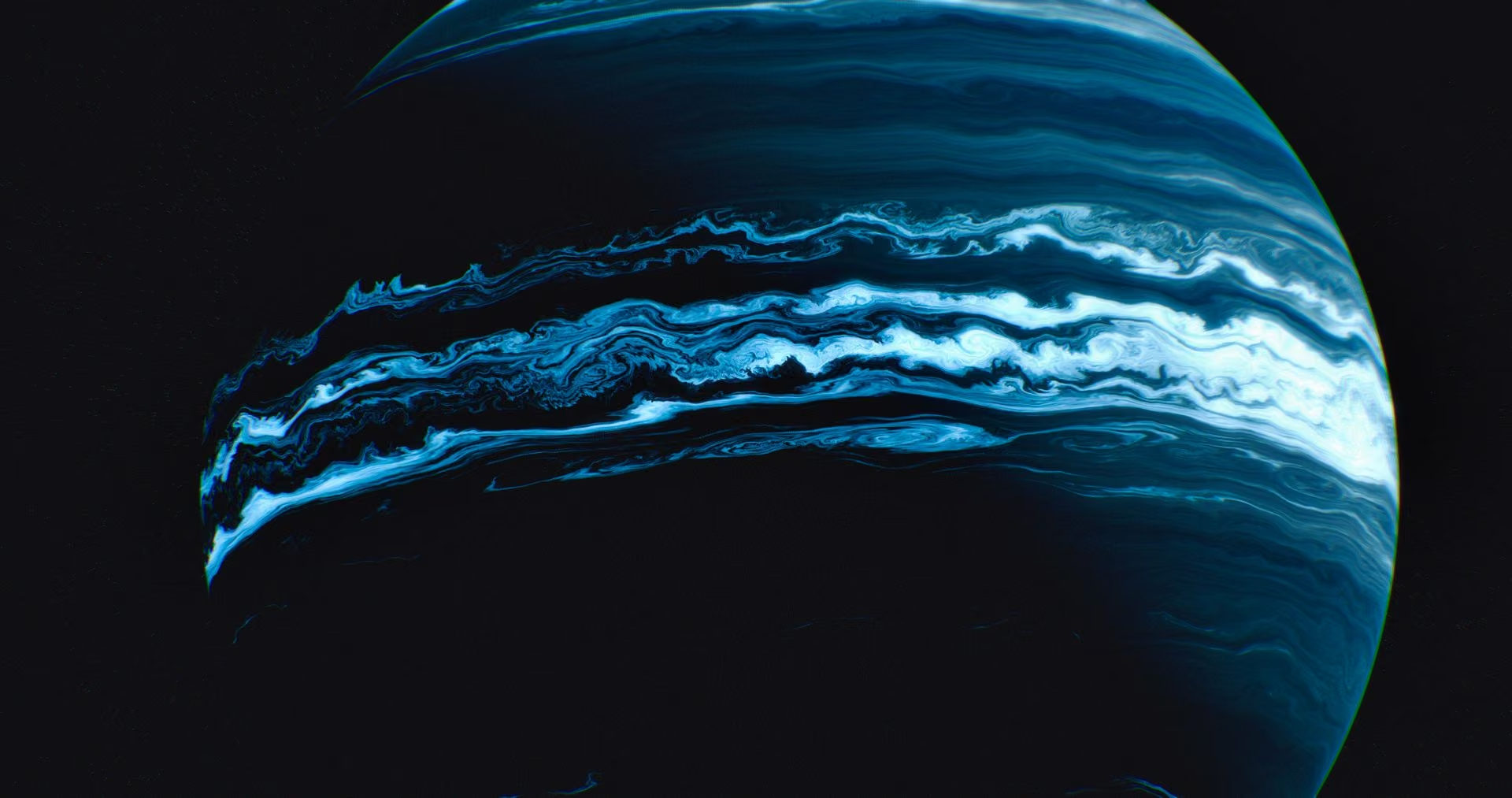
Data collected by NASA's TESS space telescope has led to the discovery of two planets with unusual characteristics outside the Solar System. The planets, named TOI-791 b and TOI-791 c, were found to be close to Jupiter in size but very low in mass.
NASA described the two objects as "super-fluffy" planets whose densities resemble cotton candy.
Jupiter-sized, very low mass
According to the study, led by the University of Oxford and published in Monthly Notices of the Royal Astronomical Society, the two planets orbit the Sun-like star TOI-791, about 1,113 light-years from Earth. TOI-791 b is almost the same size as Jupiter but has only 3 percent of its mass. TOI-791 c, which is larger than Jupiter, has a mass equal to only 5.9 percent of Jupiter's. These values place both among the lowest-density planets found to date.
One planet completes an orbit around its star in 139 days, the other in 232 days. By examining seven years of data collected by TESS, researchers calculated the gravitational effects of the planets on each other and determined their masses that way.
Expert assessments
George Dransfield of the University of Oxford, lead author of the study, said only a few planets of this kind are known, and finding two in the same star system is even rarer. Jon Jenkins of NASA's Ames Research Center said the planets raise important questions for current formation models.
Next steps
Scientists aim to study the chemical makeup of the planets' atmospheres and how they evolve over time. The new observations are expected to shed light on unknowns about the formation of giant planets and their movements within star systems.
Bora Haber previously reported: Starship's 15th test flight begins: Super Heavy explodes in the air on return and Dust grains from the Kuiper Belt carry traces of ancient heavy water.
Science guides
- What is artificial intelligence and how does it work?Artificial intelligence is a set of methods that let computers perform tasks normally requiring human intelligence, such as learning, pattern recognition, decision-making and language understanding. Most modern systems learn from examples in data.
- What is lodos, why does it occur, and what to do during a lodos warning?Lodos is the everyday Turkish name for a strong southwesterly wind. When a warning is issued, guard against roofs, glass, trees and sea hazards, and follow the Turkish State Meteorological Service (MGM).
- Carbon monoxide poisoning: symptoms and preventionCarbon monoxide (CO) is a colorless, odorless gas produced by incomplete combustion in stoves, water heaters and boilers. If you suspect it, get into fresh air at once and call 112.


Comments
Sign in to comment.