

Dust grains from the Kuiper Belt carry traces of ancient heavy water
Twelve dust grains collected by NASA from the stratosphere may originate in the Kuiper Belt beyond Neptune. Their oxygen isotopes point to a reservoir rich in heavy water in the outer Solar System.
· 3 min read
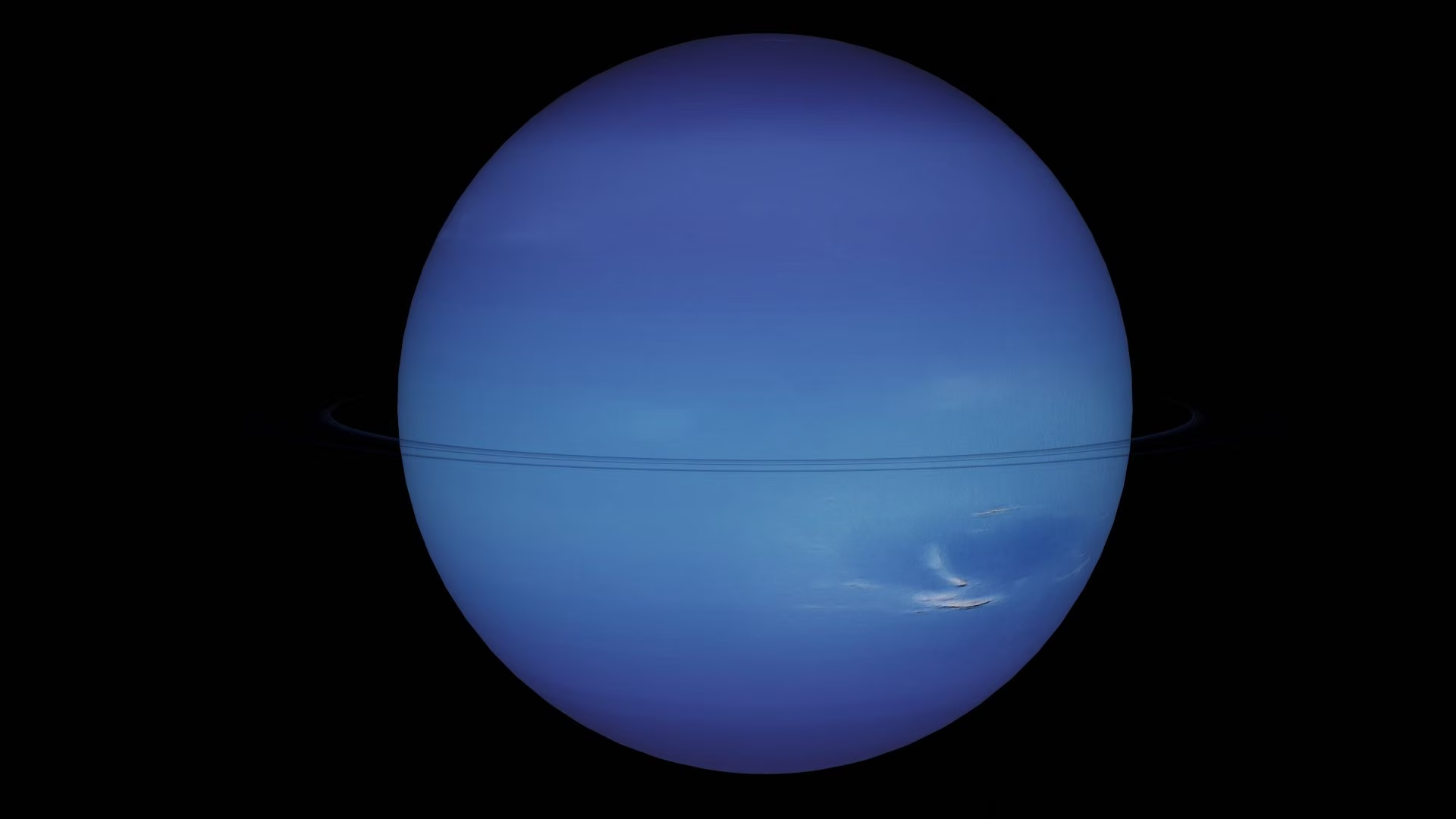
A team led by planetary scientist Lindsay Keller of NASA's Johnson Space Center has detected traces of very old water in small dust grains believed to have reached Earth from the Kuiper Belt. The researchers found evidence that at least part of this water is of a type entirely different from water on Earth.
The finding shows that the water reservoir at the edge of the Solar System remained pristine, unaffected by changes in regions closer to the Sun. According to the study, this constitutes:
compelling evidence for a large heavy-water reservoir beyond the orbits of the giant planets, largely isolated from inner Solar System material
Lindsay Keller and colleagues
Samples from a hard-to-reach region
The Kuiper Belt lies beyond Neptune's orbit, about 30 astronomical units from the Sun, or 30 times the distance between Earth and the Sun. Very few human-made spacecraft have reached it. Landing a probe there or bringing samples back to Earth is currently seen as out of the question. Yet the ice and rock fragments there are thought to be among the least altered remnants of the early Solar System since they came together about 4.5 billion years ago from the cloud of dust and gas around the Sun.
Scientists are helped by the fact that the Solar System is full of cosmic dust, some of which travels a very long way to Earth. Among materials collected from the stratosphere by NASA's high-altitude aircraft, Keller and colleagues found 12 dust grains, each 10 to 30 micrometers across.
Clues to origin: radiation and carbon
In interplanetary space, energetic particles from the Sun displace atoms in the crystal structure of dust and leave tracks. The more tracks a mineral has accumulated, the longer it has drifted through space. A slight drag force from sunlight (the Poynting-Robertson effect) also gradually pulls dust toward the Sun on a spiral path. The track density in the grains was about 100 times higher than expected for dust from the asteroid belt or Jupiter-family comets, which is consistent with a distant origin such as the Kuiper Belt.
The grains were also exceptionally rich in carbon, containing about four times as much as certain carbonaceous meteorites. This suggests they formed far from the Sun under different conditions.
Clay minerals and oxygen isotopes
Many grains contain clays such as saponite and serpentine, along with hydrated minerals formed when water reacts with other minerals. This means liquid water must have existed at some point inside the parent bodies from which the dust broke off. Although the Kuiper Belt is frozen today, heat from radioactive decay or collisions may have warmed the interiors of some icy bodies enough to melt water.
That water vanished long ago, but the minerals retained some of the oxygen that was once part of its molecules. The ratios of the isotopes oxygen-16, oxygen-17 and oxygen-18 vary depending on where and how a material formed. Measurements showed an unusual enrichment in the heavier isotopes. By remodeling the reactions that formed the hydrated minerals, the researchers showed that the water behind them was exceptionally rich in heavy oxygen isotopes and carries the signature of an ancient reservoir that existed in the outer Solar System billions of years ago.
Bora Haber previously reported: Voyager 1 nears a new record in its 49-year journey as its power dwindles and NASA unveils Promise lunar rover, set to launch to the Moon by end of 2028.
Science guides
- What should be in an earthquake emergency bag?An earthquake bag should hold at least three days of water and food, first aid supplies, a flashlight, whistle, medications, document copies and batteries or a power bank. Keep it near the exit, easy to reach.
- What is a meteor shower, and when and how can you watch one?A meteor shower happens when Earth passes through trails of dust left by a comet or asteroid, producing many “shooting stars.” Dark skies and patience are the keys to watching one.
- What is climate change, and what are its causes and effects?Climate change is a lasting shift in Earth's long-term temperature and precipitation patterns. Today its main driver is greenhouse gas emissions from fossil fuels; effects include heatwaves, drought and sea level rise.


Comments
Sign in to comment.