

Rich Marine Life Documented on Marshall Islands' Bikar and Bokak Atolls
A 2023 scientific expedition documented many fish groups, seabird colonies and turtle nests on Bikar and Bokak atolls in the northern Marshall Islands.
· 2 min read
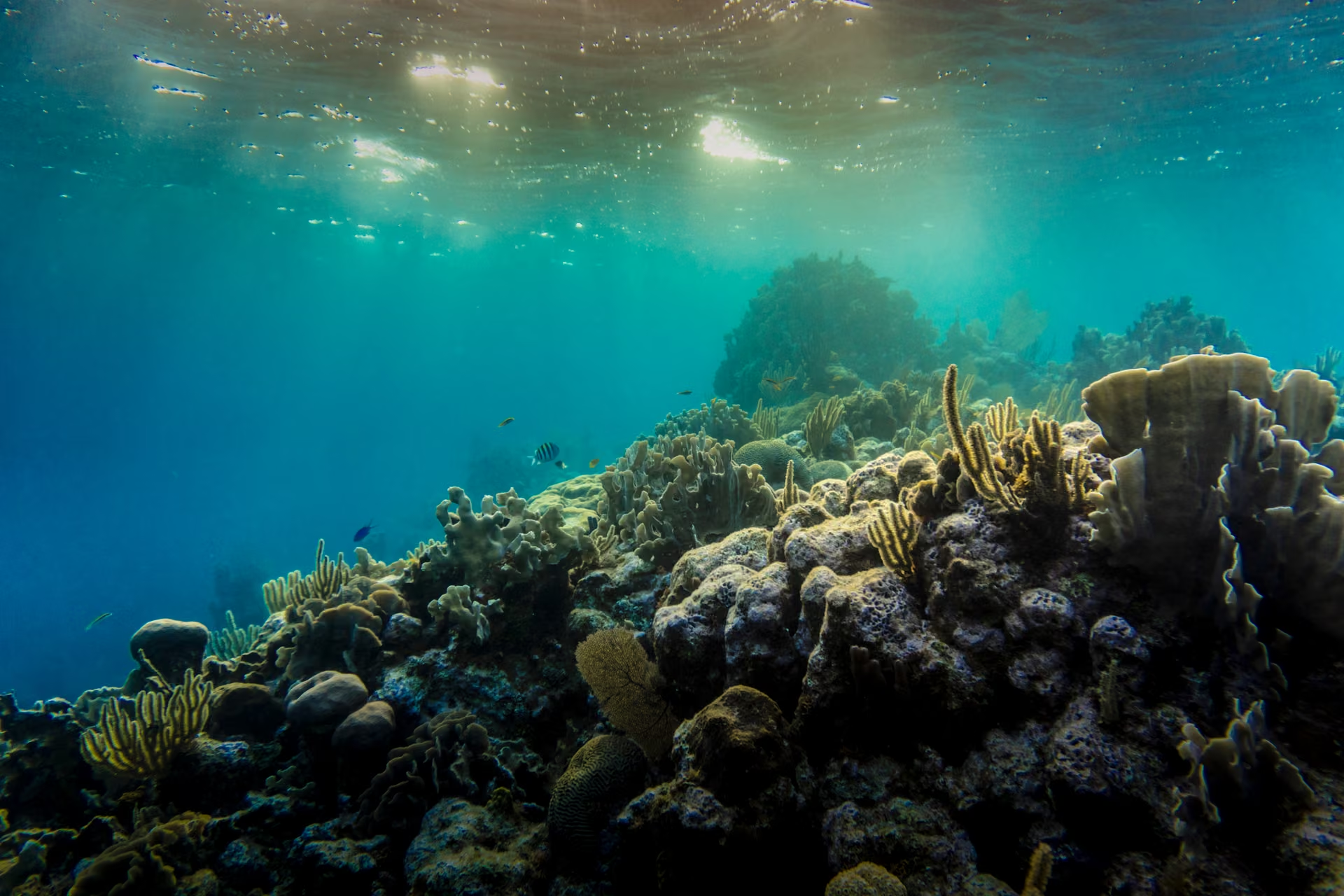
Bikar and Bokak atolls, in the far north of the Marshall Islands, were studied in detail during an expedition in 2023. According to a study published in a scientific journal, the two coral islands are among the least disturbed ecosystems left in the world's oceans. Researchers recorded many fish groups, seabird colonies and dense turtle nesting in the area.
How the expedition was carried out
The chief scientist of the expedition, and first author of the study, was marine ecologist Alan Friedlander of the University of Hawai'i. The Marshall Islands Marine Resources Authority and National Geographic's Pristine Seas program ran the work jointly. The team took measurements on land, at sea and from the air, using diving gear, underwater cameras, deep-sea cameras and a submarine.
Findings on the reefs and in the deep
On the reefs, at least 266 fish groups from 38 families were seen. Total fish biomass was higher at Bokak. Fifteen groups of open-water predators, including sharks, trevally and wahoo, were also recorded.
Descending as deep as 275 meters by submarine, researchers documented 138 fish groups. Fourteen of them had never before been recorded in the Marshall Islands, and two may be new to science. Deep-sea cameras filmed 79 more groups at greater depths. Friedlander describes the atolls as "one of the best ecological reference systems we have".
Birds and turtles
Researchers found that 15 seabird colonies were nesting or likely nesting. Brown boobies photographed over Bikar were among the standouts. On the beaches, 71 turtle tracks and 132 nest pits were counted, most of the nests on Bikar.
Background and threats
The atolls have been protected for decades by people of the neighboring Utirik Atoll. Two years after the expedition, in 2025, a broad marine area around them was declared the Marshall Islands' first national marine protected area. Friedlander says the significance goes beyond one country: "Bikar and Bokak are a treasure not only for the Marshall Islands but for the whole planet."
The system is still not entirely untouched. The Polynesian rat (Rattus exulans) is present on both atolls, while warming waters, coral bleaching and ocean acidification threaten both. In the paper, researchers wrote that they chose the phrase "relatively undisturbed" as a comparison and do not assume remote reefs were pristine throughout history. Friedlander says: "As human activities increasingly threaten biodiversity, areas far from heavy human impact serve as vital refuges."
Guides on this topic
Science guides
- What should be in an earthquake emergency bag?An earthquake bag should hold at least three days of water and food, first aid supplies, a flashlight, whistle, medications, document copies and batteries or a power bank. Keep it near the exit, easy to reach.
- What is a meteor shower, and when and how can you watch one?A meteor shower happens when Earth passes through trails of dust left by a comet or asteroid, producing many “shooting stars.” Dark skies and patience are the keys to watching one.
- What is artificial intelligence and how does it work?Artificial intelligence is a set of methods that let computers perform tasks normally requiring human intelligence, such as learning, pattern recognition, decision-making and language understanding. Most modern systems learn from examples in data.

Comments
Sign in to comment.