

Unmanned ground vehicles carry drones into the field as Turkish systems debut at international contest
At the International Best Military Drone Team Competition, Turkish solutions built from different drones integrated onto unmanned ground vehicles were presented to international delegations.
· 2 min read
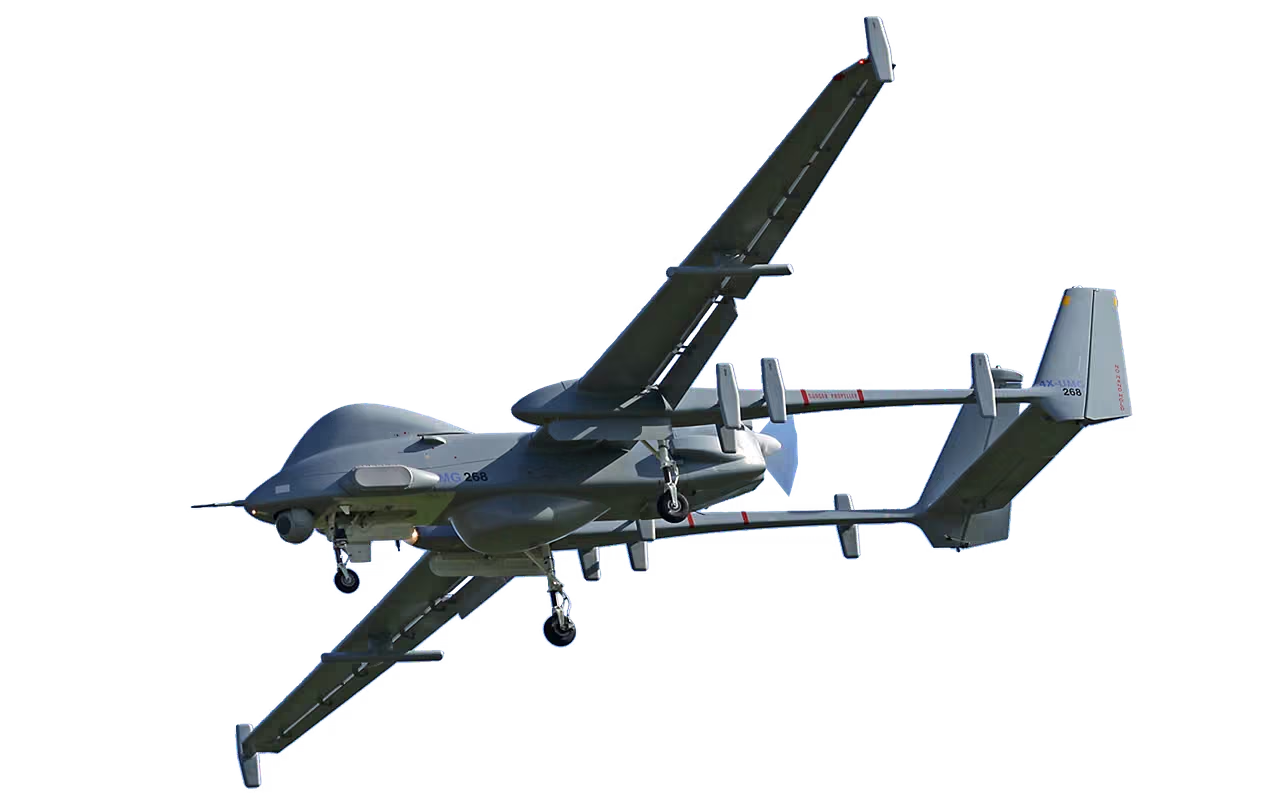
Unmanned systems, growing in number and capability on the battlefield, are gaining the ability to operate jointly. Work in this field within Turkey's defense industry, along with joint-use concepts, was showcased at the International Best Military Drone Team Competition.
Coordinated by the Infantry School Command, solutions combining unmanned ground vehicles and drones from DASAL Aviation Technologies, a subsidiary of Altınay Defense Technologies, and Tekatron Technology were presented to international delegations.
One ground platform, different drones
In the mission concept, Tekatron's unmanned ground vehicles (UGVs) carried a range of drones: MIKON 10-inch FPV drones, swarm-capable MIKON 10-inch drones, a MIKON 15-inch drone with a mechanism to release four 60 mm mortar munitions, a MIKON 10-inch drone with an anti-tank munition, and the Arı Kuşu reconnaissance and surveillance drone. This variety highlighted that the same UGV platform can be configured for different mission needs and that ground and aerial elements can complement each other.
In conventional use, a ground vehicle is set up for a specific mission with its weapons, sensors or other equipment. With drones added to the system, the vehicle becomes a structure that can observe its surroundings from the air and deliver aerial vehicles with different mission profiles to the operating area. The UGV can thus be seen as a platform that helps coordinate different missions, rather than just a vehicle carrying personnel and materiel.
The roles of the drones
In FPV (first-person view) drones, the operator steers the aircraft using the image from its camera. Combined with the UGV's mobility, these drones could help examine the vehicle's surroundings from the air and assess developments in the field. Swarm-capable drones bring up the use of several aircraft in a shared mission. The drones with a mortar-release mechanism and an anti-tank munition show that unmanned aerial vehicles can be configured with different payloads.
Arı Kuşu, in turn, focuses on gathering information from the field and feeding it into the decision-making of ground elements. Such a drone could make it possible to examine areas outside the vehicle's direct line of sight.
One of the approach's prominent advantages is that in some scenarios it can reduce the need to send separate platforms for different tasks. However, carrying several drones on the same vehicle does not mean all tasks can be performed simultaneously. That requires evaluating the vehicle's payload and power infrastructure, communication systems, mission control software and the operator's workload together.
Technology guides
- What is two-step verification and how do you turn it on?Two-step verification adds a second proof (a code, prompt or key) on top of your password when you sign in. You enable it in your account's security settings, and it protects you even if your password is stolen.
- How to get and renew your e-Devlet passwordYou get an e-Devlet password in person at a PTT branch with an ID document. If you forgot it, reset it with “Forgot my password” on e-Devlet Kapısı (Turkey's e-Government Gateway) or get a new one from PTT.
- How to view grades and absences on e-OkulSign in to the e-Okul Parent Information System with e-Devlet or a parent password, select the student, and open the grades or absences menu. Students can also check their own records.
Comments
Sign in to comment.