

First mushroom species containing both hallucinogenic and deadly compounds documented
Galerina indica, found in Florida, has been confirmed as the first mushroom species to contain both psilocybin and amatoxin. The study was published in Current Biology on November 11.
· 2 min read
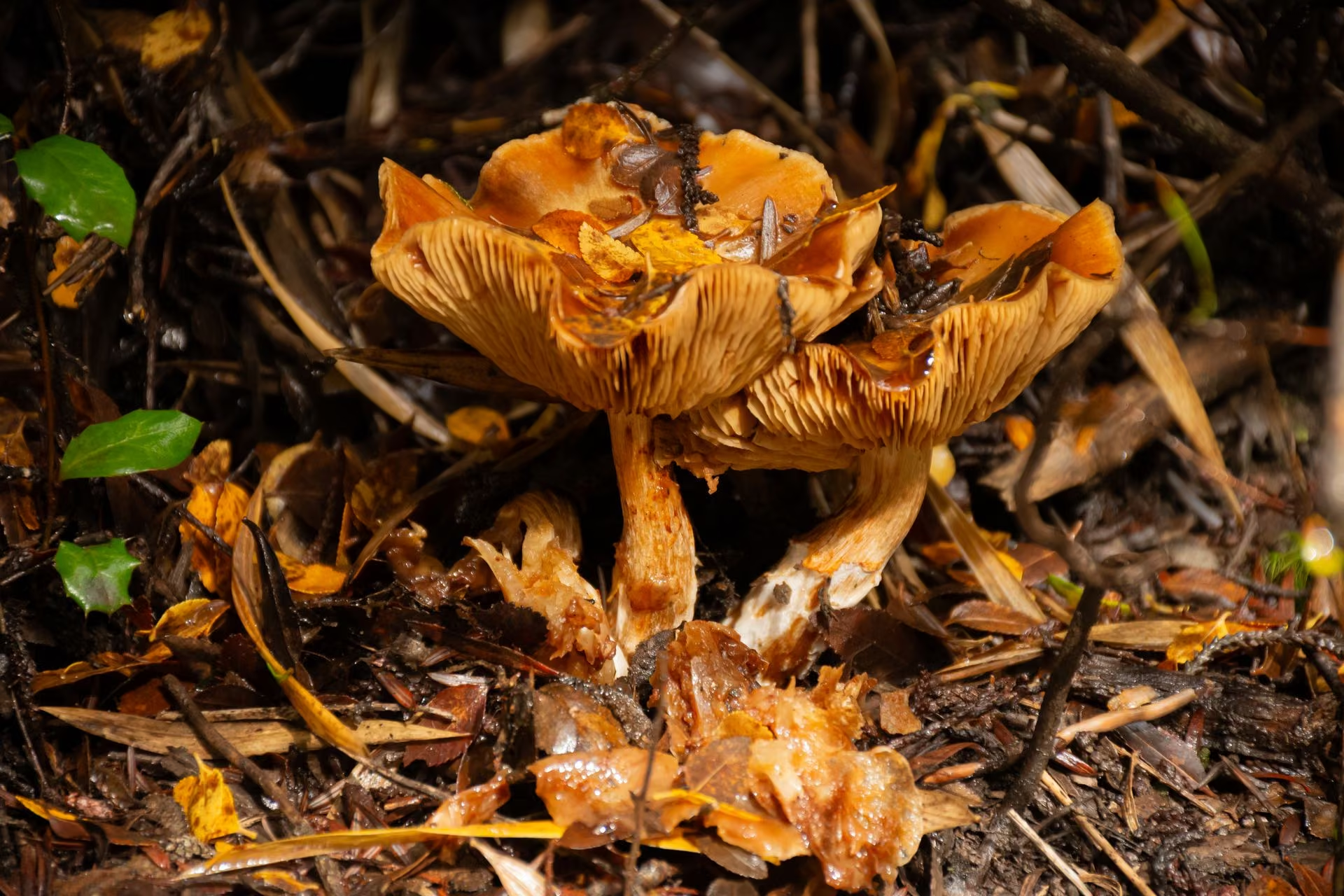
Scientists have documented the first mushroom species that contains both psilocybin, which causes hallucinations, and amatoxin, which can cause fatal poisoning. The study of the species, scientifically named Galerina indica and nicknamed the "black magic mushroom," was published in Current Biology on November 11.
Mushrooms are usually grouped by the compounds they contain. Species with psilocybin cause hallucinations, while some species with amatoxin are among the major causes of deadly mushroom poisonings. Scientists had previously considered it theoretically possible for both compounds to occur in the same species, but no example confirming it had been documented.
Noticed by chance
Andrew Kunik, an undergraduate student working in Prof. Matthew E. Smith's laboratory at the University of Florida, came across a small brown mushroom while cataloging fungal species at the university's Ordway Swisher Biological Station. The mushroom was identified as belonging to the genus Galerina, some species of which are known to contain deadly amatoxin.
The mushroom turning blue when touched caught the researchers' attention, as this trait is also seen in some psilocybin-containing mushrooms. The team carried out genome and chemical analyses. In examinations to which Michael Christopher of the University of Florida's Department of Chemistry also contributed, the mushroom was confirmed to contain both compounds.
Kunik said he was surprised by the results. He noted that such a possibility was known, but that they did not want to reach a firm conclusion until detailed analyses were complete.
Possible horizontal gene transfer
The researchers think the genes that allow the mushroom to produce the two compounds may have entered the genus Galerina through horizontal gene transfer. Unlike the passing of genetic material from parent to offspring, horizontal gene transfer means genetic material moves directly between different organisms. Bryn Dentinger, a University of Utah mycologist and co-author of the study, likened the process to two people shaking hands and part of one person's DNA passing to the other.
According to the researchers, it is a remarkable finding that two independent horizontal gene transfers took place in the same genus for these two particular compounds.
Background
Scientists still cannot fully explain why mushrooms produce psilocybin. Amatoxins are thought to help protect the mushroom from animals that eat it. In future work, the research team aims to disable the genes in question to find out what role these compounds play in the mushroom's life in nature.
Science guides
- What is a meteor shower, and when and how can you watch one?A meteor shower happens when Earth passes through trails of dust left by a comet or asteroid, producing many “shooting stars.” Dark skies and patience are the keys to watching one.
- What is climate change, and what are its causes and effects?Climate change is a lasting shift in Earth's long-term temperature and precipitation patterns. Today its main driver is greenhouse gas emissions from fossil fuels; effects include heatwaves, drought and sea level rise.
- What is artificial intelligence and how does it work?Artificial intelligence is a set of methods that let computers perform tasks normally requiring human intelligence, such as learning, pattern recognition, decision-making and language understanding. Most modern systems learn from examples in data.
Comments
Sign in to comment.