

Voyager 1 Reaches One Light-Day From Earth on November 18
NASA's Voyager 1 will reach a distance of one light-day from Earth on November 18. The probe took 49 years to get there; as its power fades, only two instruments still work.
· 3 min read
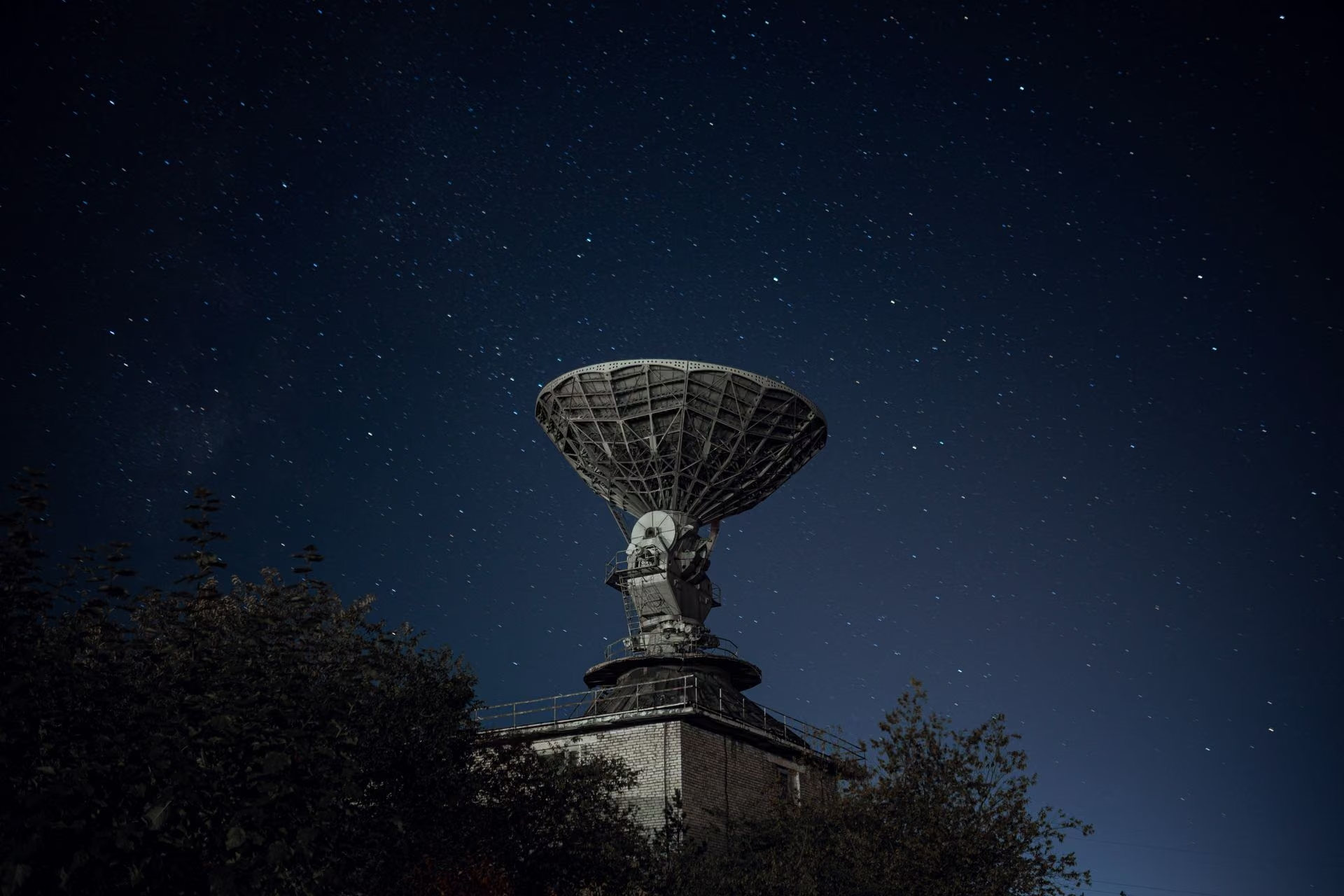
NASA's Voyager 1 spacecraft will reach a distance of one light-day from Earth on November 18, setting a new distance record. The probe arrives at this point after about half a century of travel, 49 years. Voyager 1 is currently the human-made object farthest from Earth.
A light-day is the distance light covers in 24 hours at roughly 299,792 kilometers per second. That equals 25.9 billion kilometers, or about 16.1 billion miles. A person walking at an average of 3 miles per hour (about 4.8 km/h) would need 612,015 years to cover the same distance.
Speed and earlier records
The probe is currently traveling at about 37,763 miles per hour (over 60,700 km/h). It reached this speed in 1980 after passing near Saturn and using the planet's gravity, and its speed has stayed nearly constant since. Voyager 1 had also gained speed from the gravity of Jupiter and Saturn between 1979 and 1980.
The new milestone comes 14 years after the probe crossed the heliosphere into interstellar space in 2012. In 1998, Voyager 1 had overtaken Pioneer 10 to become the human-made object farthest from Earth.
Efforts to save power
Engineers at NASA's Jet Propulsion Laboratory spent nearly half a century troubleshooting and maintaining the probe, shutting down unnecessary systems to save power. In 2026, over several weeks, the team switched off three instruments and moved to three alternatives that use less energy. The campaign, called the "Big Bang" internally, was also applied to Voyager 2.
The switch was completed in early September. As a result, the probe kept its systems warm enough to operate in the freezing environment of interstellar space while conserving its dwindling power. The operation was complex, requiring many instruments to be switched on and off at the same time. Radio signals take almost a day to reach the probe from Earth and almost another day to return, which made the task harder. The probe also went through a few hours of downtime during the operation.
In April 2026, Voyager 1 suffered a sudden loss of power, and NASA had to shut down one of its three remaining instruments. Only two instruments are now operating on the probe.
Bora Haber previously reported: Voyager 1 nears a new record in its 49-year journey as its power dwindles and Prada's Pradasphere exhibition opens in Milan, from archive to Moon suit.
Background: The final stage approaches
As long as the probe has enough power to communicate with Earth, reaching one light-day will probably be its last major milestone. Based on current power use and decline, Voyager 1 is expected to switch off its last scientific instrument in the 2030s. By 2036, there may be too little power left to send radio signals, and contact with Earth could be lost completely.
Its twin, Voyager 2, was launched 16 days before Voyager 1. Because of its lower speed and different trajectory, it appears unlikely to reach the one light-day mark before its scientific instruments stop working.
Science guides
- What is climate change, and what are its causes and effects?Climate change is a lasting shift in Earth's long-term temperature and precipitation patterns. Today its main driver is greenhouse gas emissions from fossil fuels; effects include heatwaves, drought and sea level rise.
- What is artificial intelligence and how does it work?Artificial intelligence is a set of methods that let computers perform tasks normally requiring human intelligence, such as learning, pattern recognition, decision-making and language understanding. Most modern systems learn from examples in data.
- What is lodos, why does it occur, and what to do during a lodos warning?Lodos is the everyday Turkish name for a strong southwesterly wind. When a warning is issued, guard against roofs, glass, trees and sea hazards, and follow the Turkish State Meteorological Service (MGM).
Comments
Sign in to comment.