

Parker Solar Probe data reveal a hidden order in space turbulence
An international team used data from NASA's Parker Solar Probe to provide the first direct proof that turbulent magnetic fields reverse their preferred direction of rotation at small scales.
· 2 min read
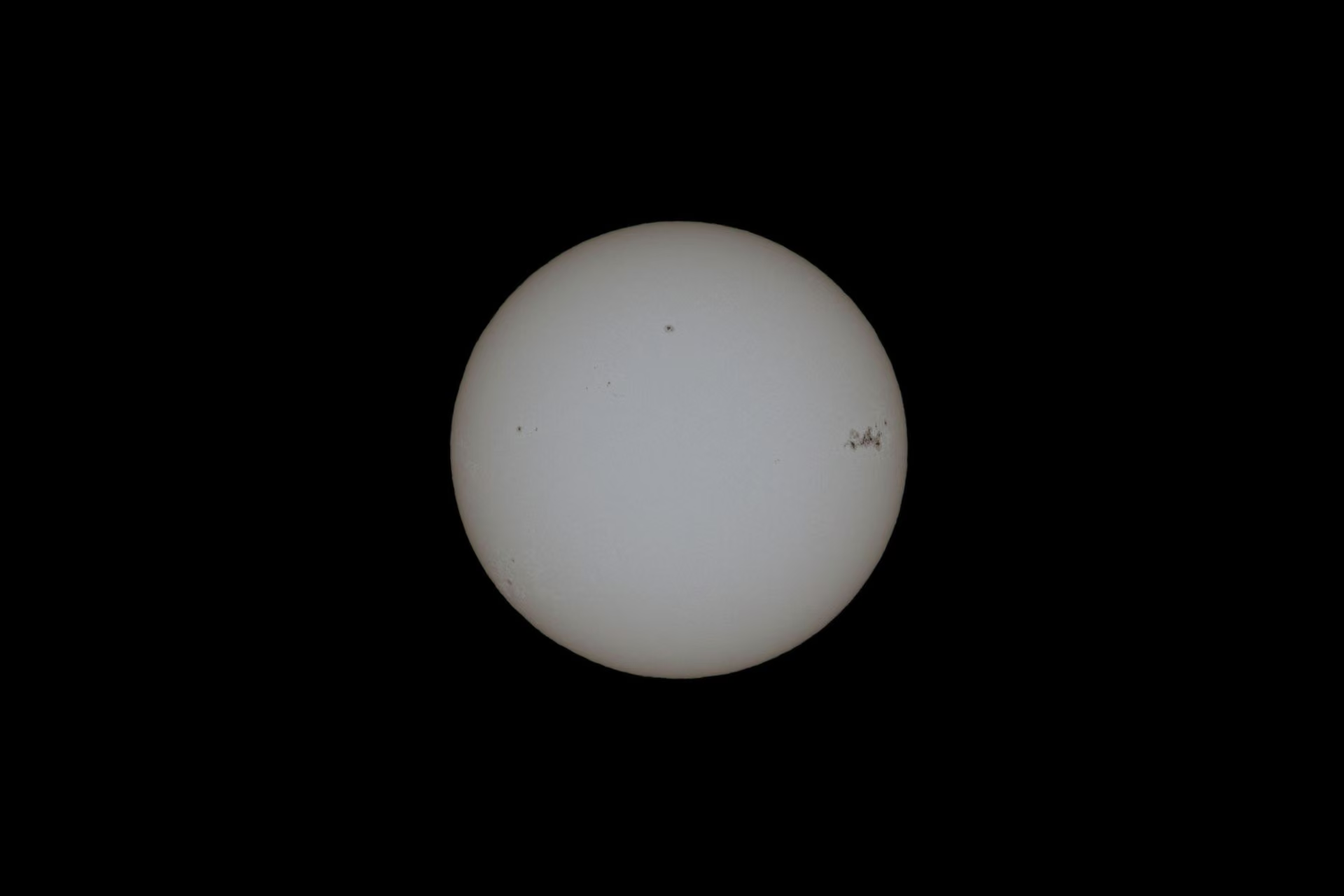
Precise data from NASA's Parker Solar Probe have shown an organized pattern within the seemingly disorderly motions of turbulence in space plasma. An international research team provided the first direct proof that turbulent magnetic fields reverse their preferred direction of rotation as they move from large scales to small scales.
Viewed from the Sun outward, magnetic fields rotate counterclockwise at large scales and clockwise at small scales. The reversal occurs at the scale where fluid-like behavior of the plasma gives way to the dynamics of individual particles. The farther from the Sun, the more pronounced the change becomes, and it shifts to larger scales.
Plasma and turbulence
Plasma is an ionized gas containing charged particles. Just as incense smoke makes turbulence in air visible, plasma creates turbulence in space. Because particles rarely collide in space plasma, which is guided by electric and magnetic fields, it shows a different dynamic.
Dr. Masatomi Iizawa of Technische Universität Braunschweig said that although turbulence represents disorderly motion, they saw a clear structure in the spectrum. The results of the study, which involved researchers from ten countries, were published in The Astrophysical Journal Letters.
Bora Haber previously reported: Nearly seven-hour spacewalk at ISS: final solar array installed and NASA's Swift Observatory Reenters Atmosphere Near Sumatra.
Background
Dr. Yokoi of the University of Tokyo said the results are of great importance for both plasma physics and astrophysics. Plasma turbulence plays an important role in the solar wind, solar flares and Earth's magnetosphere, as well as in accretion disks around celestial bodies.
Turbulence in interplanetary space affects the shock waves and magnetic clouds produced by solar flares. For this reason it is considered a critical factor in predicting geomagnetic storms.
Science guides
- How do I book a hospital appointment through MHRS?You can book through MHRS (Central Physician Appointment System) on its website, mobile app or the Alo 182 line. Log in with your Turkish ID number, then choose province, hospital, clinic and doctor.
- What is the difference between earthquake magnitude and intensity?Magnitude measures the energy released at an earthquake's source and is a single value. Intensity describes the effects felt at a particular place and varies by location.
- How do solar and lunar eclipses happen?A solar eclipse happens when the Moon passes between Earth and the Sun and covers it partly or fully. A lunar eclipse happens when the Moon moves into Earth's shadow.

Comments
Sign in to comment.