

Perseverance finds the smallest dust particles ever recorded on Mars
NASA's Perseverance rover detected Martian dust particles about 100 nanometers across. The findings show that health and equipment precautions will be needed for future crewed missions.
· 3 min read
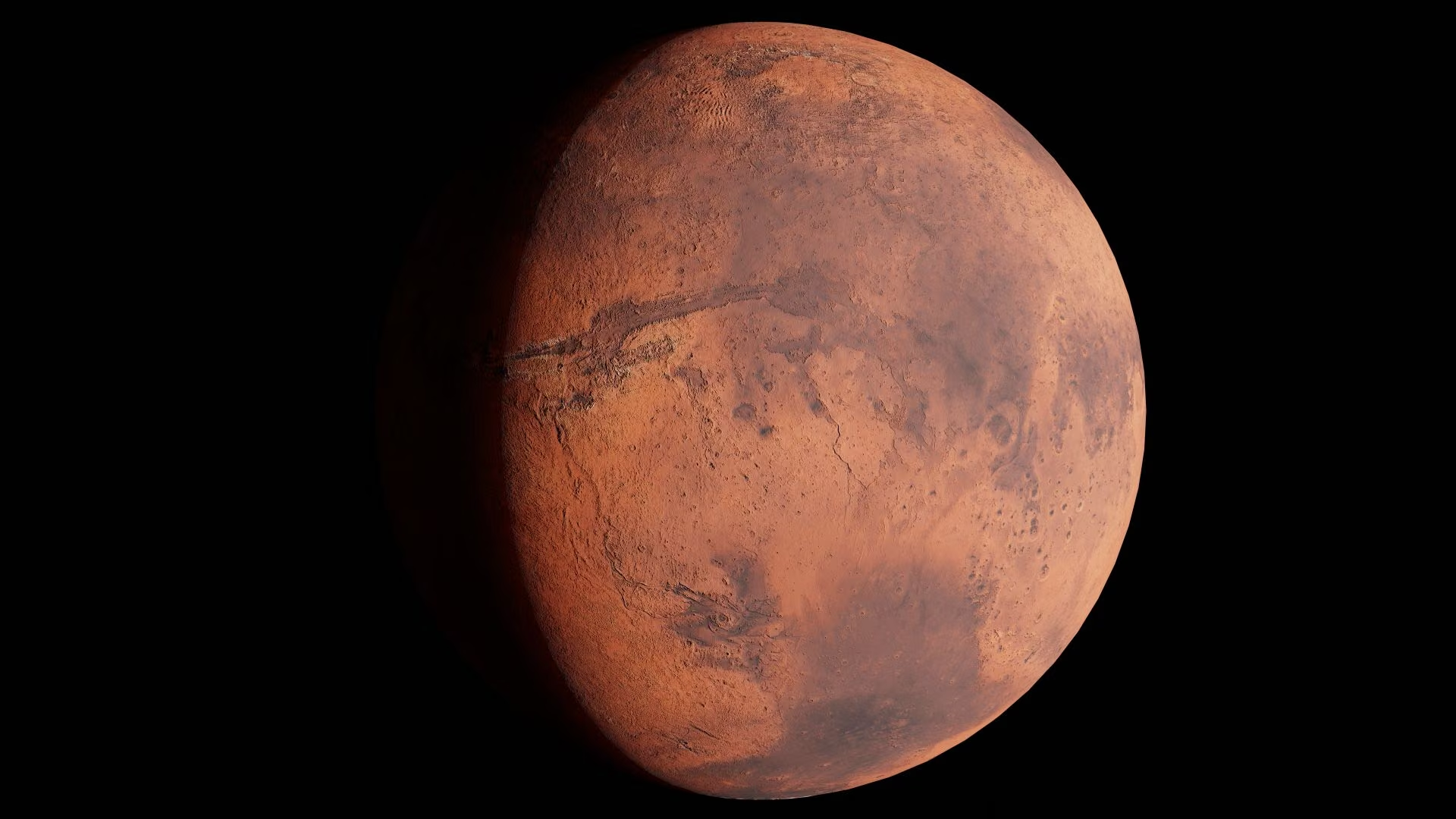
NASA's Perseverance rover has detected the smallest dust particles ever recorded on Mars. About 100 nanometers across, they are roughly 500 times thinner than a human hair. The study, published on October 28 in the Proceedings of the National Academy of Sciences, indicates that Martian dust could pose serious challenges for crewed missions to the planet.
According to the research, ultrafine dust stuck to Perseverance's equipment, including material samples designed for use in spacesuits. The six-wheeled rover landed in the Jezero crater region in Mars's northern hemisphere in 2021 and has operated there since.
What it means for health
According to planetary scientist Scott VanBommel of the University of Washington, a member of the Perseverance team and lead author of the study, smaller particle size does not always mean a higher hazard. However, smaller particles are more likely to penetrate deeper into the human body and are harder to remove.
VanBommel says toxicity depends on dose and duration of exposure. Martian dust contains silica, iron compounds and chlorine compounds such as perchlorate, which can be harmful if the body is exposed to large enough amounts.
Earlier measurements could only detect Martian dust particles up to about 3 micrometers across. Perseverance's PIXL (Planetary Instrument for X-ray Lithochemistry) recorded two smaller groups of particles, including ultrafine ones under 2.5 micrometers, about 30 times smaller than a human hair. Such dust may be small enough to enter an astronaut's lungs, reach the bloodstream and potentially damage vital organs.
Spacesuit materials
The Martian environment and the physical properties of the dust may degrade materials used in spacesuits and habitats over time. To study this, Perseverance carried samples of materials that could be used in spacesuits, including Vectran synthetic fibers and Teflon protective coatings. Each sample was about 20 mm across.
VanBommel said the team found no evidence that dust damaged the materials, but that the materials interacted with dust in different ways. Vectran tended to trap larger particles, which concentrated on the underside of the fabric. Teflon held less dust, but the particles that stuck were smaller. This difference reflects the role of electrostatic properties in attracting particles of different sizes.
Background
NASA aims to send astronauts to Mars in the early 2030s. According to VanBommel, the results will help guide the design of life support systems for crewed missions, from choosing materials for suits and shelters to developing methods that can clear dust particles smaller than one micrometer. The findings also strengthen the scientific basis of the toxicity risk assessment guidelines NASA is developing. The amount of dust entering living areas will depend on suit design and the airlock system; NASA is researching solutions such as suit ports and dual-chamber airlocks.
NASA gained experience with dust during its crewed Moon missions between 1969 and 1972. Lunar dust wore down the outer layer of suits, damaged seals and scratched visors. Some astronauts had symptoms resembling pollen allergy, though no firm link to the dust was established. For lunar dust, particle shape matters most, whereas for Martian dust chemical composition and particle size are more important. Martian dust consists mainly of fine-grained basalt; wind spreads it across the planet, rounds the particles and gradually breaks them into smaller ones through impacts.
Perseverance's main mission is to search for traces of ancient microbial life on Mars. VanBommel stressed that the results do not mean Mars is inherently dangerous to humans. In his view, dust is a risk, like radiation and distance from Earth, that must be considered from the mission design stage.
Science guides
- What is lodos, why does it occur, and what to do during a lodos warning?Lodos is the everyday Turkish name for a strong southwesterly wind. When a warning is issued, guard against roofs, glass, trees and sea hazards, and follow the Turkish State Meteorological Service (MGM).
- Carbon monoxide poisoning: symptoms and preventionCarbon monoxide (CO) is a colorless, odorless gas produced by incomplete combustion in stoves, water heaters and boilers. If you suspect it, get into fresh air at once and call 112.
- What to do in a flood: recommendations for before, during and afterBefore a flood, prepare an emergency kit and evacuation plan; during one, move to high, safe ground and stay out of moving water; afterwards, check electrical and food safety. Follow AFAD and the meteorological service for official warnings.

Comments
Sign in to comment.