

Remains of colossal Ramesses II statues found in Egypt's Gharbia
A rescue excavation at Bahbit Al-Higara in Gharbia, prompted by an inscribed stone block reported by a local resident, uncovered parts of two colossal statues thought to depict Ramesses II.
· · 1 min read
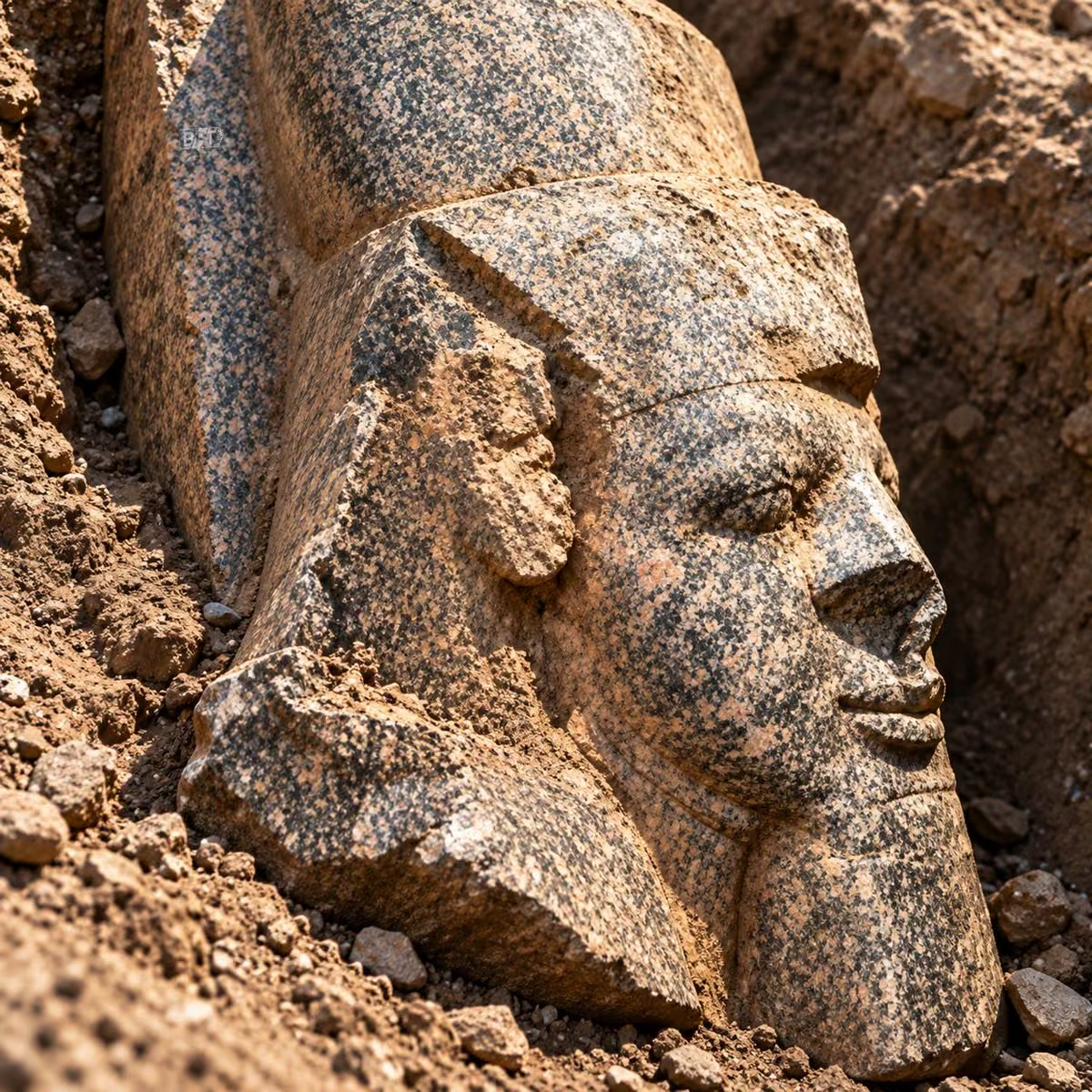
Remains of two colossal statues believed to depict Pharaoh Ramesses II have been uncovered at Bahbit Al-Higara in Egypt's Gharbia Governorate. One of the statues is estimated to have stood about 8.5 metres high, including its base, when complete.
How the discovery was made
The rescue excavation by the Supreme Council of Antiquities began after a local resident found an inscribed stone block on his land and reported it to inspectors. A specialised archaeological team was formed to investigate the area. A pink granite block bearing hieroglyphic inscriptions was also found at the site.
The finds
The first find is the colossal head of a statue of Ramesses II wearing the Double Crown, about 1.60 metres high. Its back pillar bears the king's Horus name, "Hor Ka Nakht Mery Maat." Based on the scale of the head, archaeologists estimate the complete statue would have stood around 8.5 metres including its base.
The second find is a roughly 2.40-metre section of another royal statue, also thought to represent Ramesses II. The legs and base are missing, and the upper part of the nemes headdress is damaged. The head was also recovered, with its facial features still clearly preserved.
Excavations and studies are continuing to determine the statues' original form and their relationship to the surrounding archaeological remains. The Supreme Council of Antiquities said the work is expected to provide further insight into the history and architectural development of Bahbit Al-Higara.

Comments
Sign in to comment.